“Standing amid the architectural ensemble of Confucius Temple, modern life and historical accumulation converge, then extend together toward the future. Within this flow of time, the interplay of change and permanence gives rise to a sense of magical realism.
It was precisely this cultural condition, where conflict and fusion coexist, that deeply moved me and became the point of departure for this design: how to respond with sincerity to the site’s singular cultural context and spirit, while remaining sharply attuned to contemporary aesthetics and the brand’s evolving momentum.”
— Chief Designer Li Xiang
Confucius Temple stands as both a spiritual totem of Jiangnan culture and an open, pluralistic window onto the world. The design weaves together the millennia-old cultural lineage of Nanjing with the brand’s youthful, trend-forward, “Life is for Fun” DNA, achieving a dual expression: the regeneration of a historic district’s value and the articulation of confident brand culture.
Nested Spaces: The Framed View
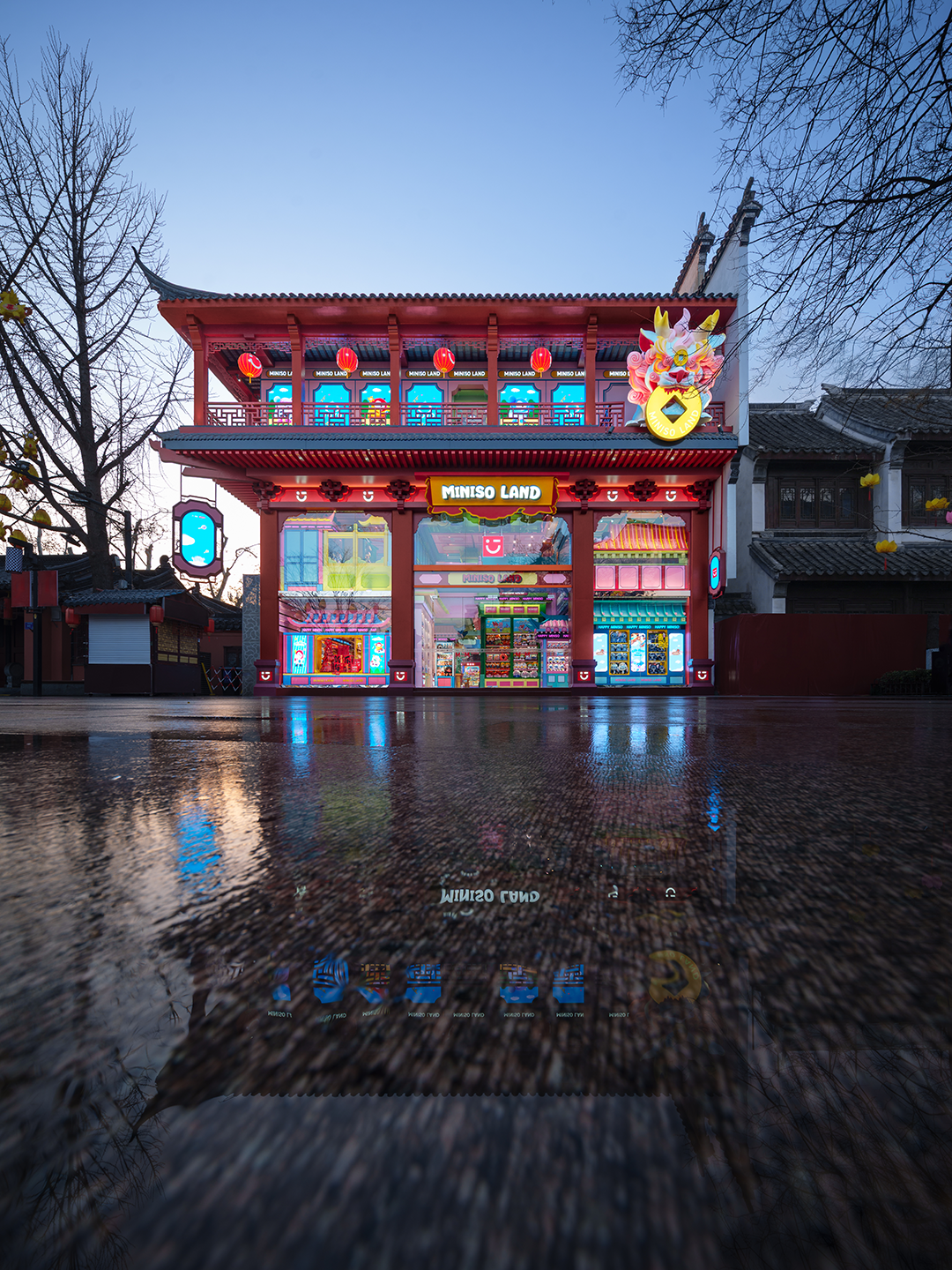
The Confucius Temple complex is grounded in the architectural language of the Ming and Qing dynasties, defined by composed proportions and clear layers, embodying the distinctive rhythm and discipline of traditional Jiangnan architecture.
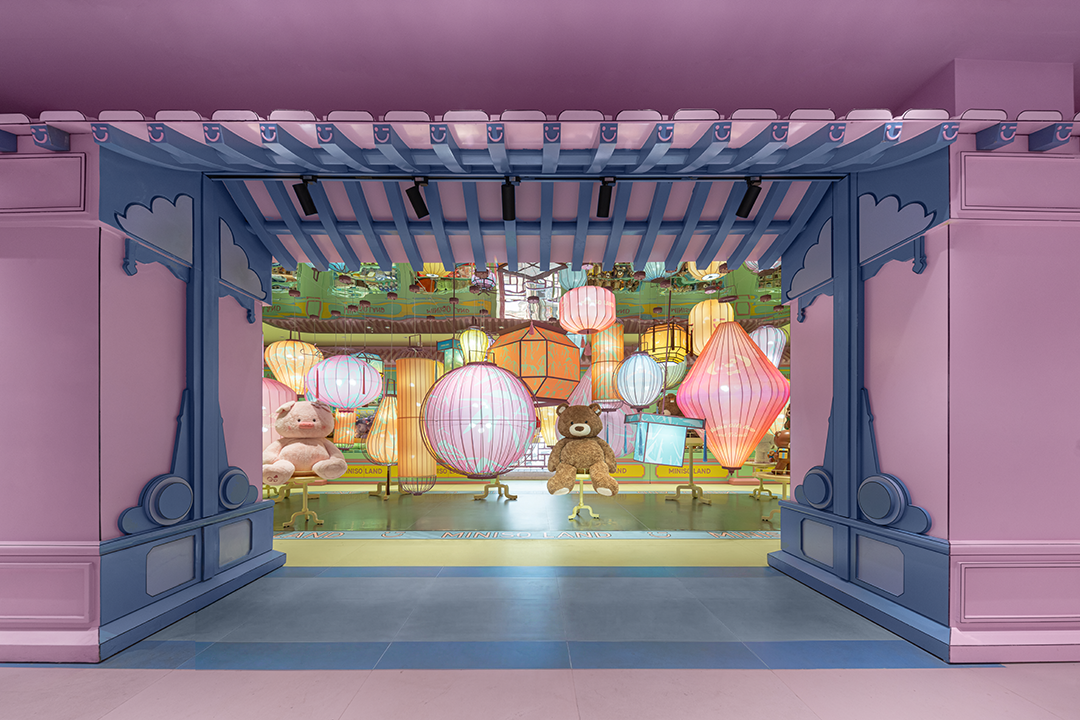
Building upon this foundation, the designer distilled its essence by incorporating the tou-kung brackets, beam-and-lintel structures, and geometric motifs of Mingyuan Building along the central axis of the Jiangnan Examination Hall into the façade design. Through the interplay of beams and columns, architectural elements are reinterpreted as framing devices that compose spatial vistas.
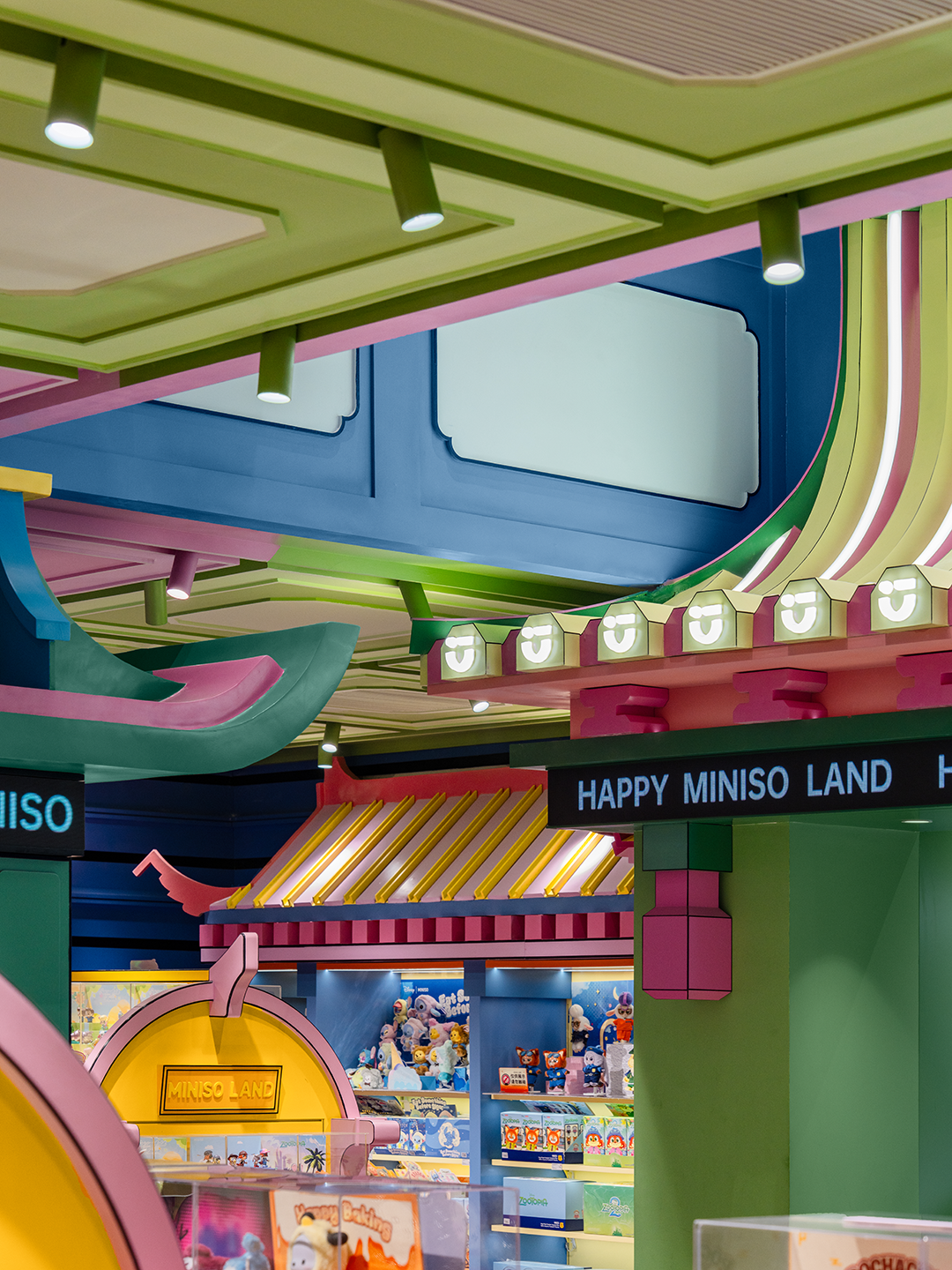
The cadence of tiered rooflines and the scale of traditional streets and alleys become structural symbols that guide the spatial construction from exterior to interior, while highly saturated colors imbue the ancient architecture with a digital-era playful aesthetic.
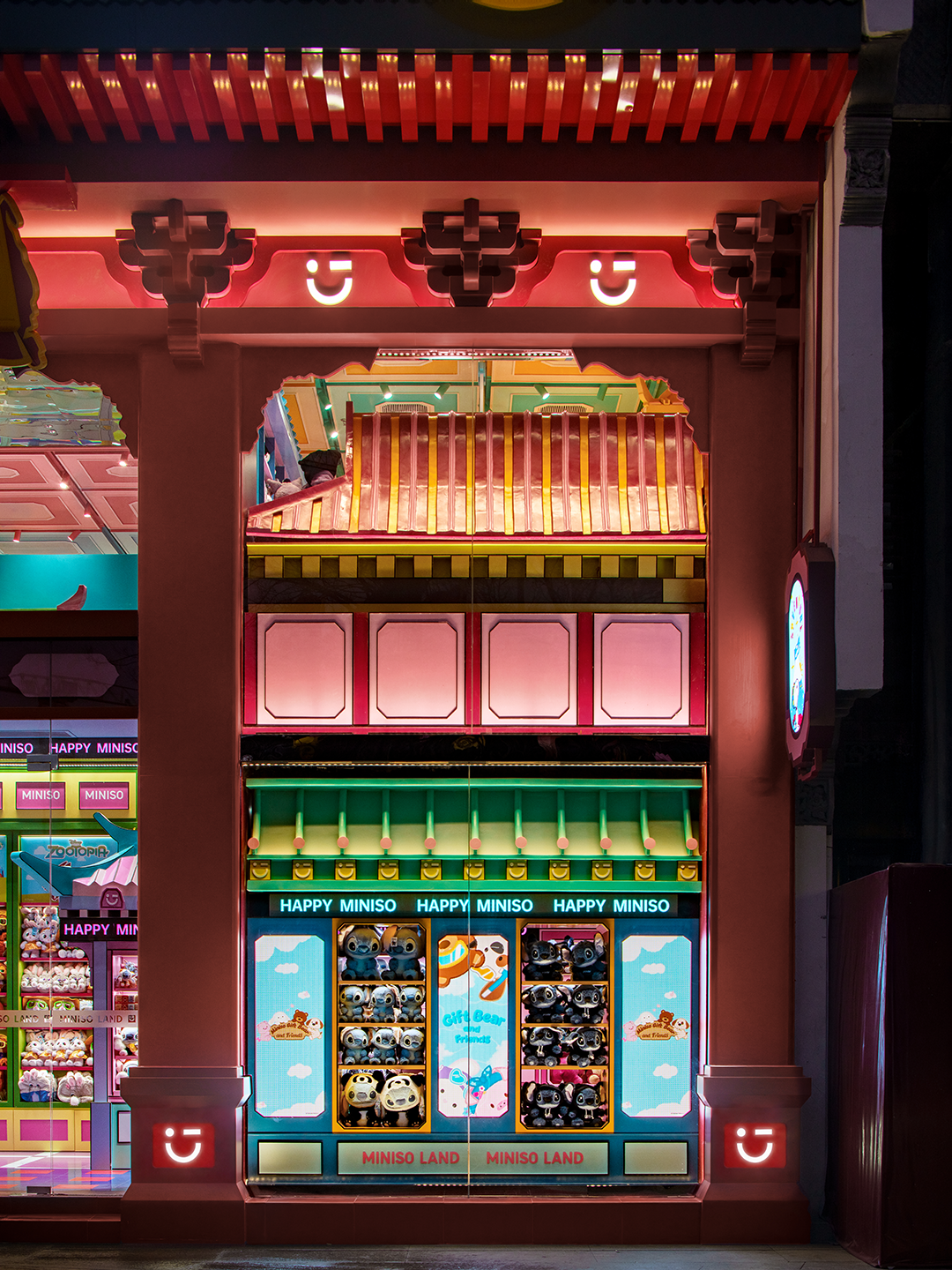
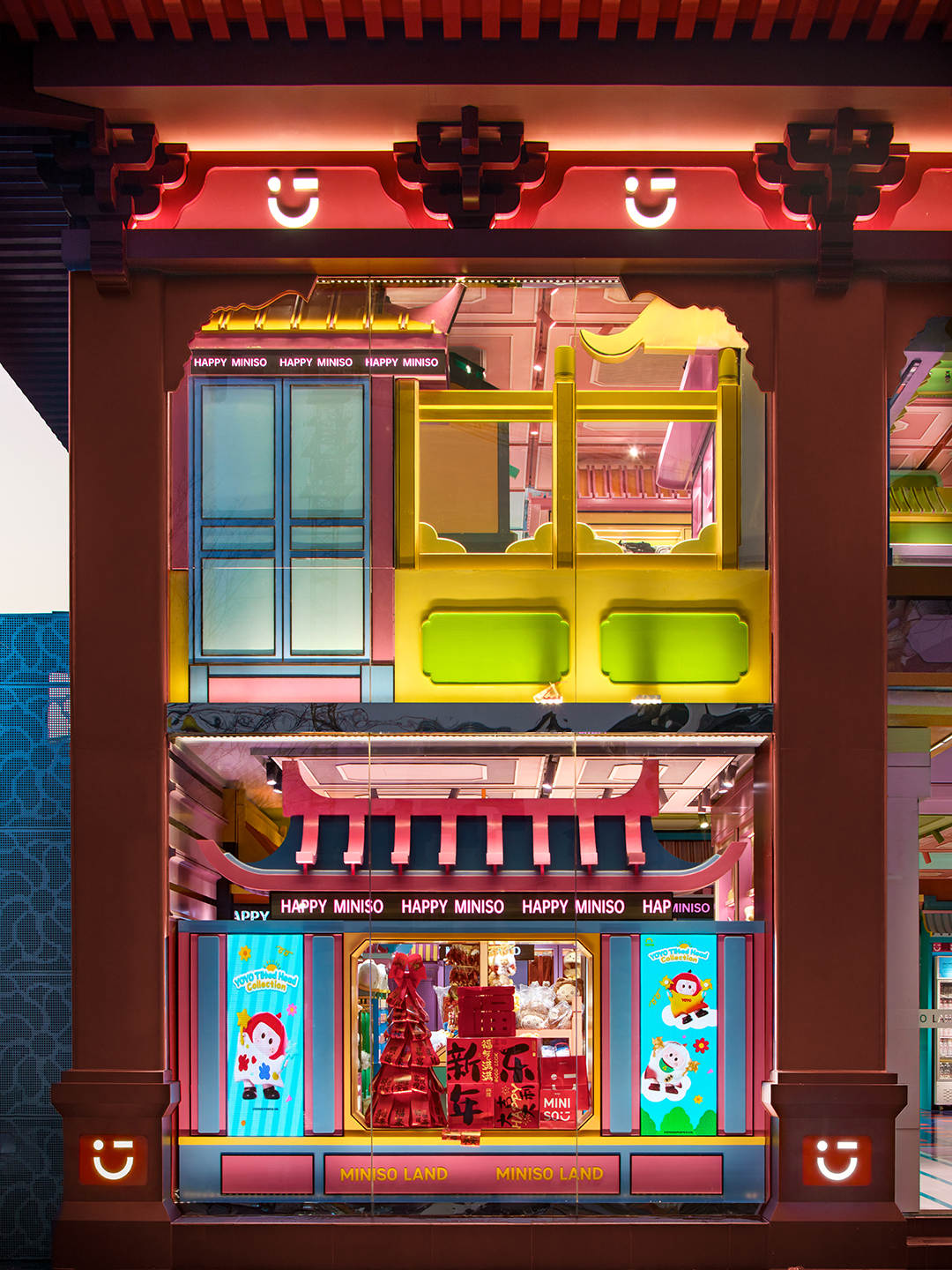
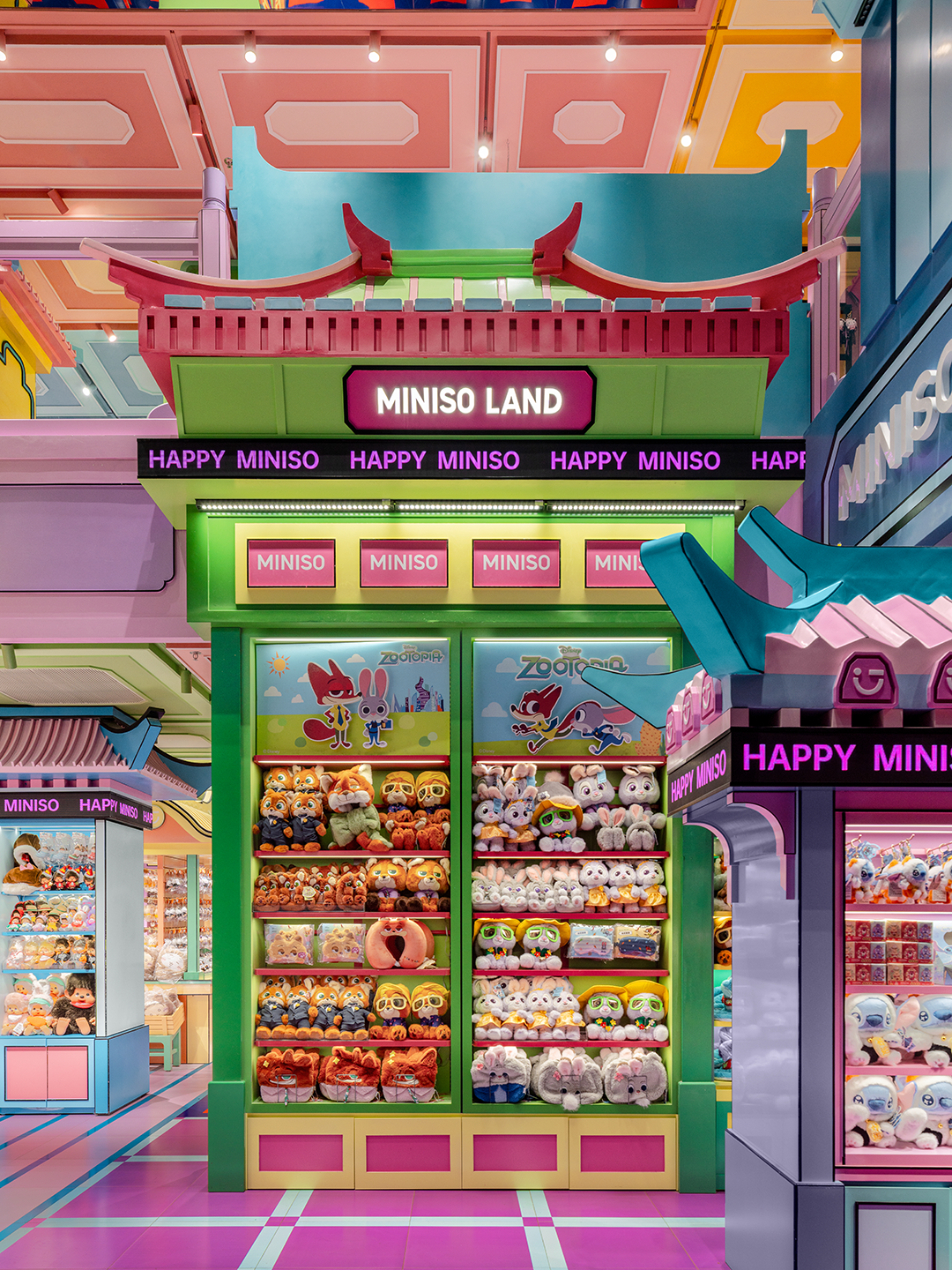
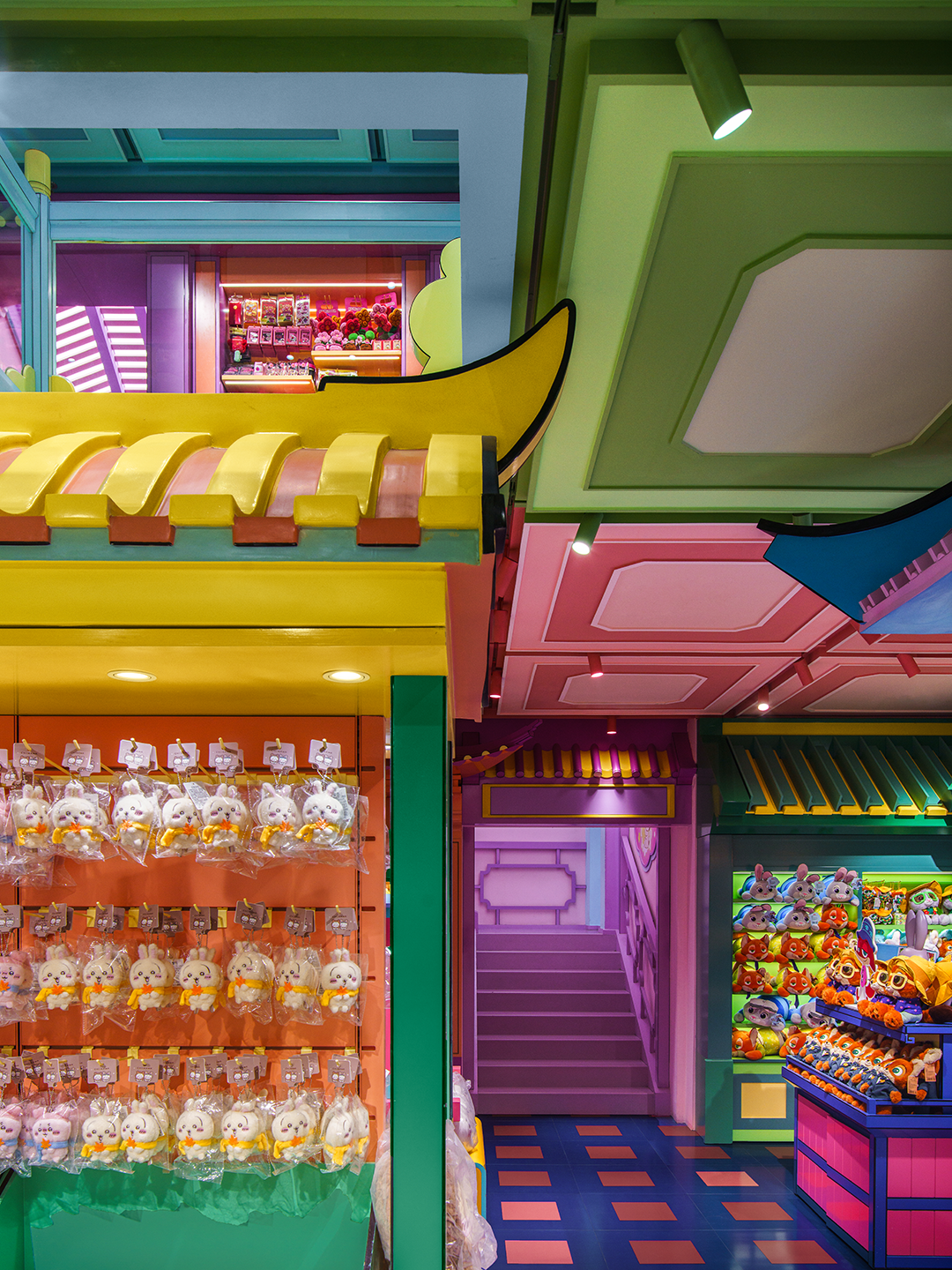
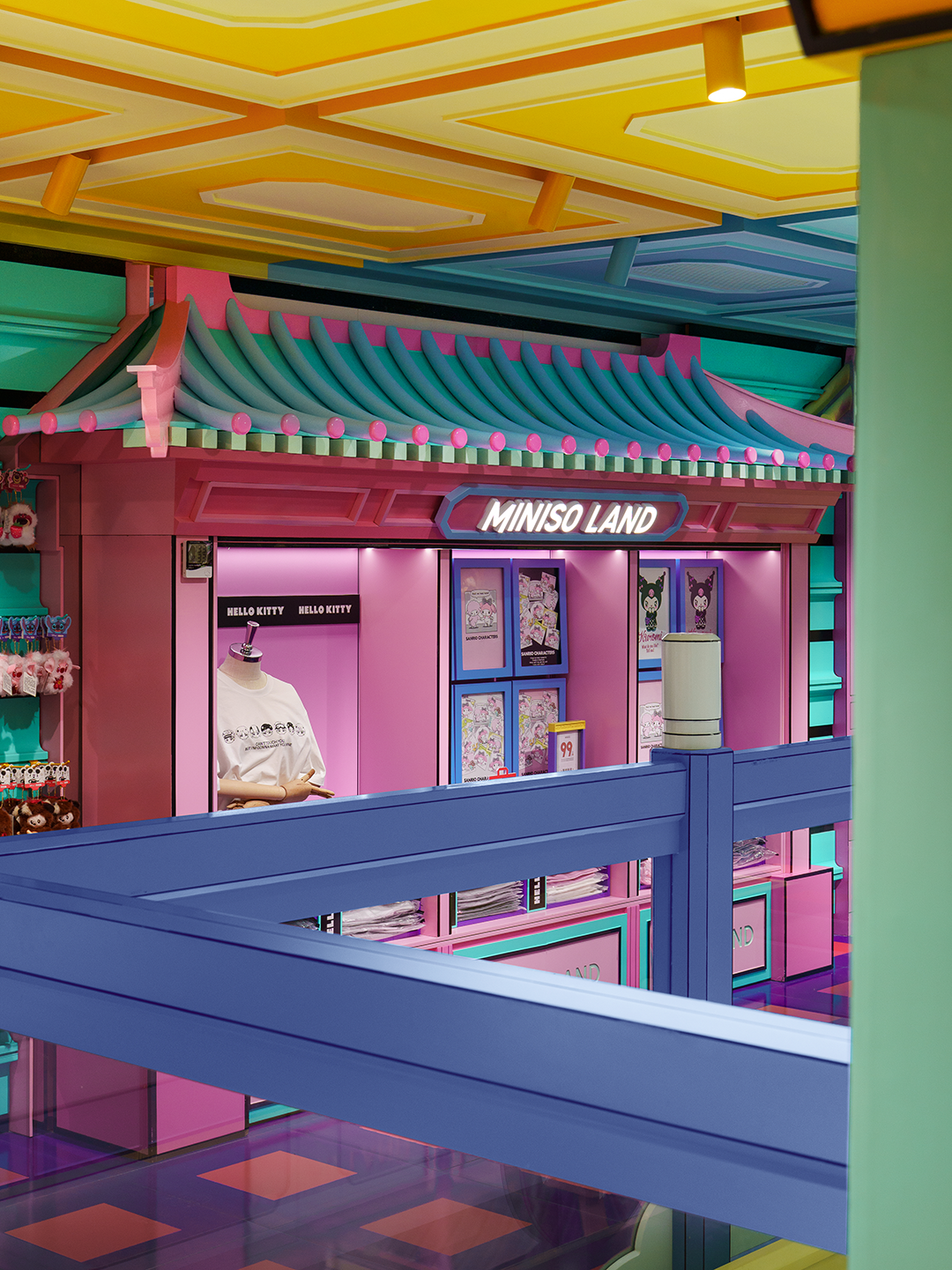
Double-height, transparent glass storefront draw the interior’s staggered, progressively layered spatial structure into view, creating a street-level experience where scenes unfold within frames and frames give way to deeper scenes. Commercial display windows thus become moving picture frames along the cultural and tourism route.
Vermilion columns and gray-tiled roofs anchor the space firmly within the historical context of Confucius Temple, while the vibrant chromatic language animating the beams and columns breaks through temporal boundaries. The striking contrast between historic architectural textures and dopamine colors defines a bold aesthetic tension.
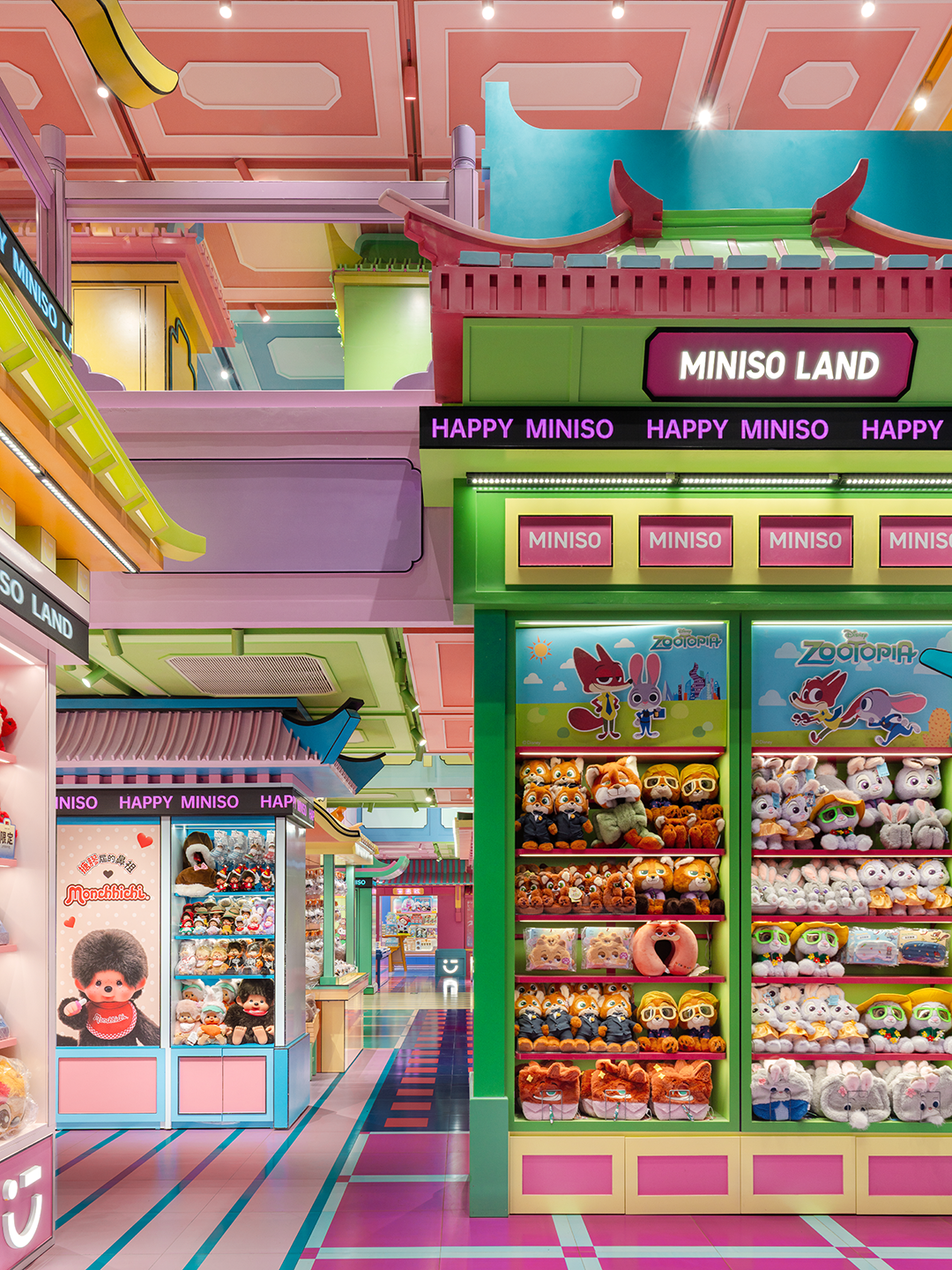
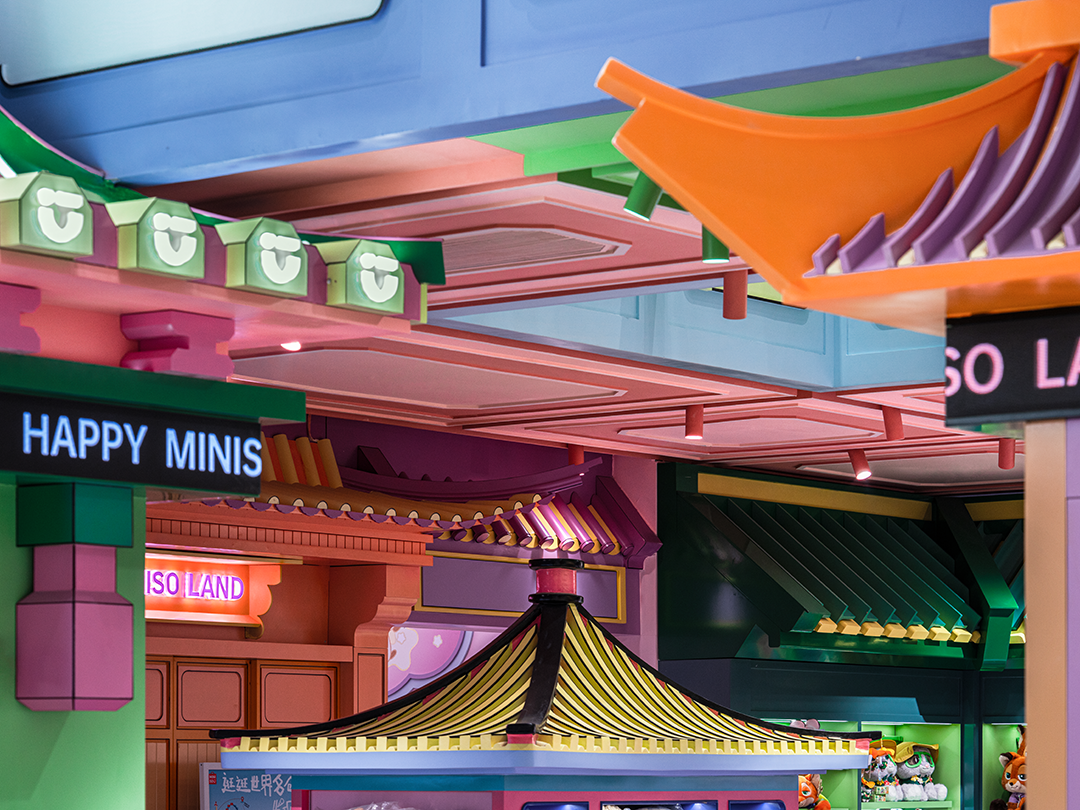
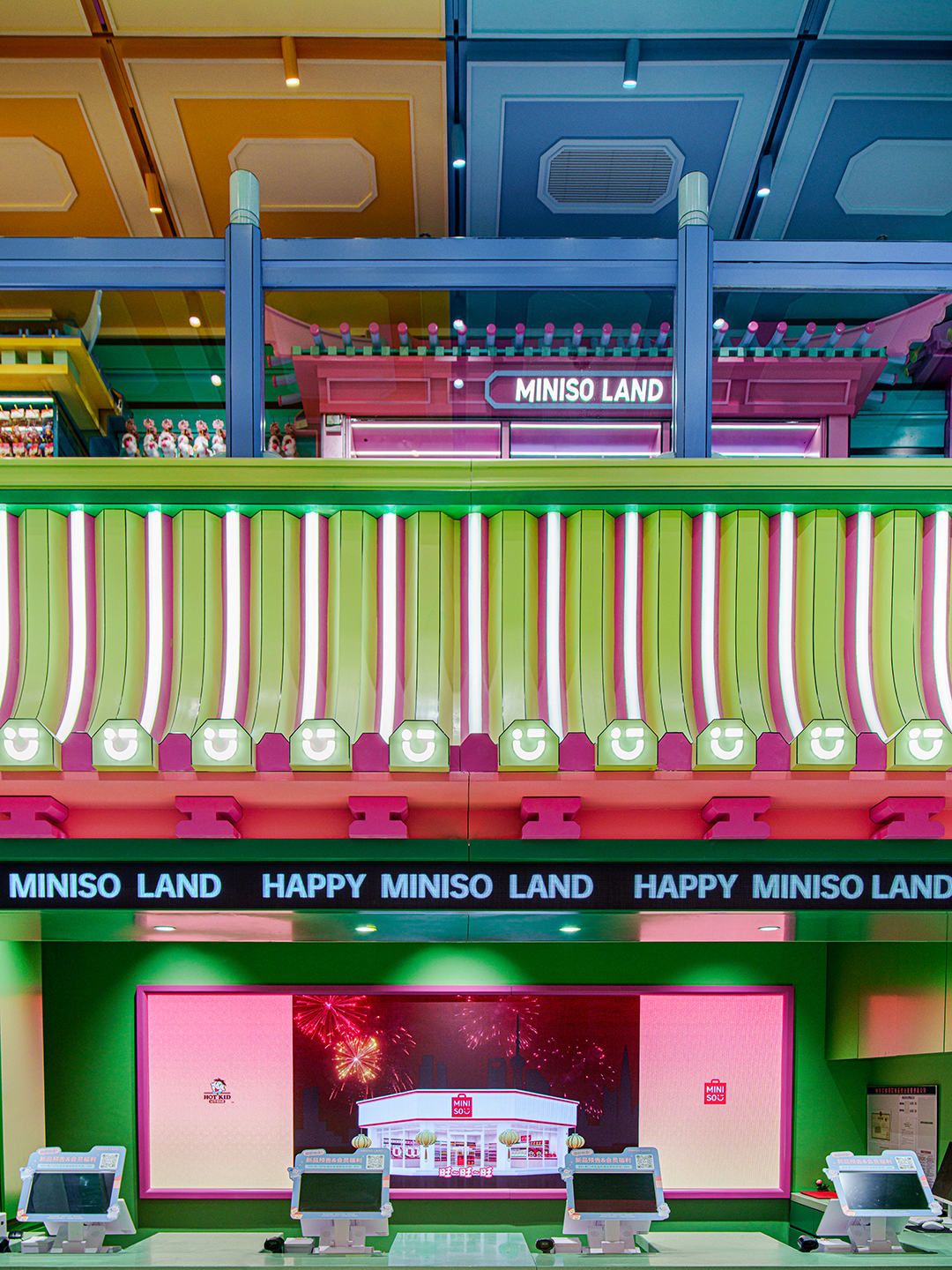
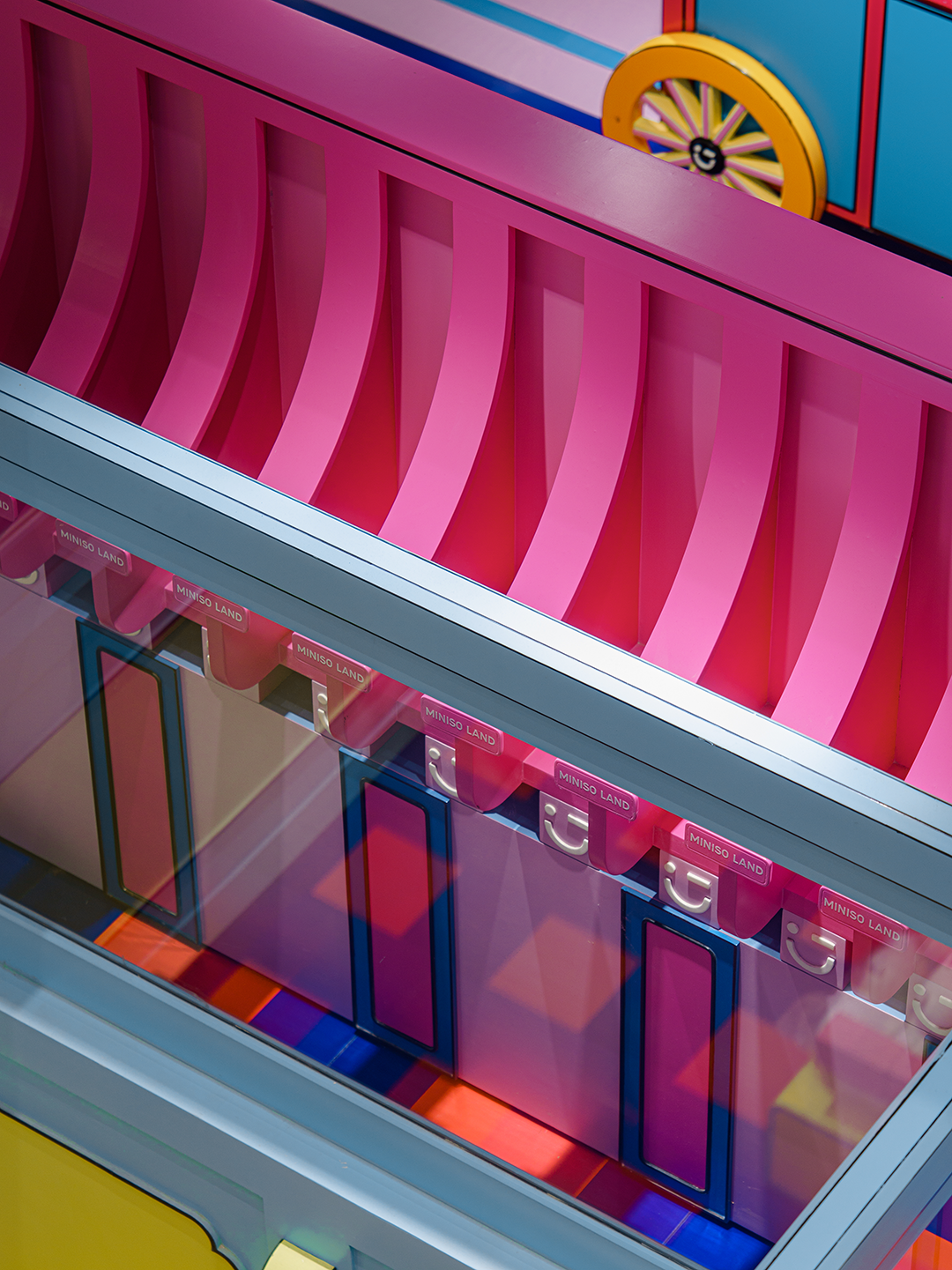
The designers have replaced static displays with narrative scene-making, leveraging urban cultural symbols to craft unique, irreplicable settings. Screen-like LED signage at the eaves and digital displays embedded within window openings extend public interaction through digital media. Brand imprints articulated at the eaves, column bases, and lanterns enable a dialogue between past and present, allowing commerce and culture-driven tourism to coexist and intertwine, completing the transformation from a closed retail venue into an open urban landscape embedded within the city’s culture.
Layers Beyond Folding Landscapes
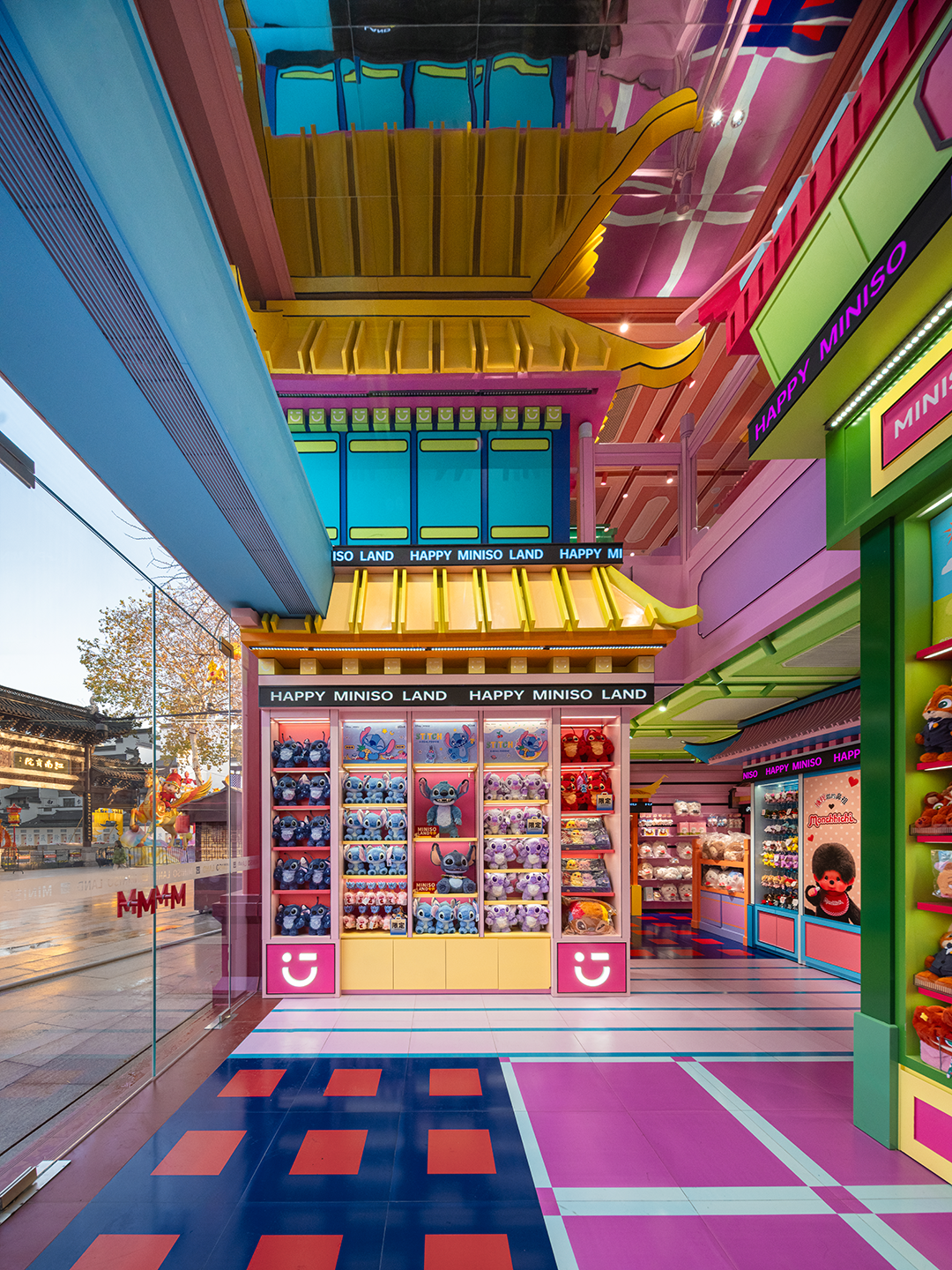
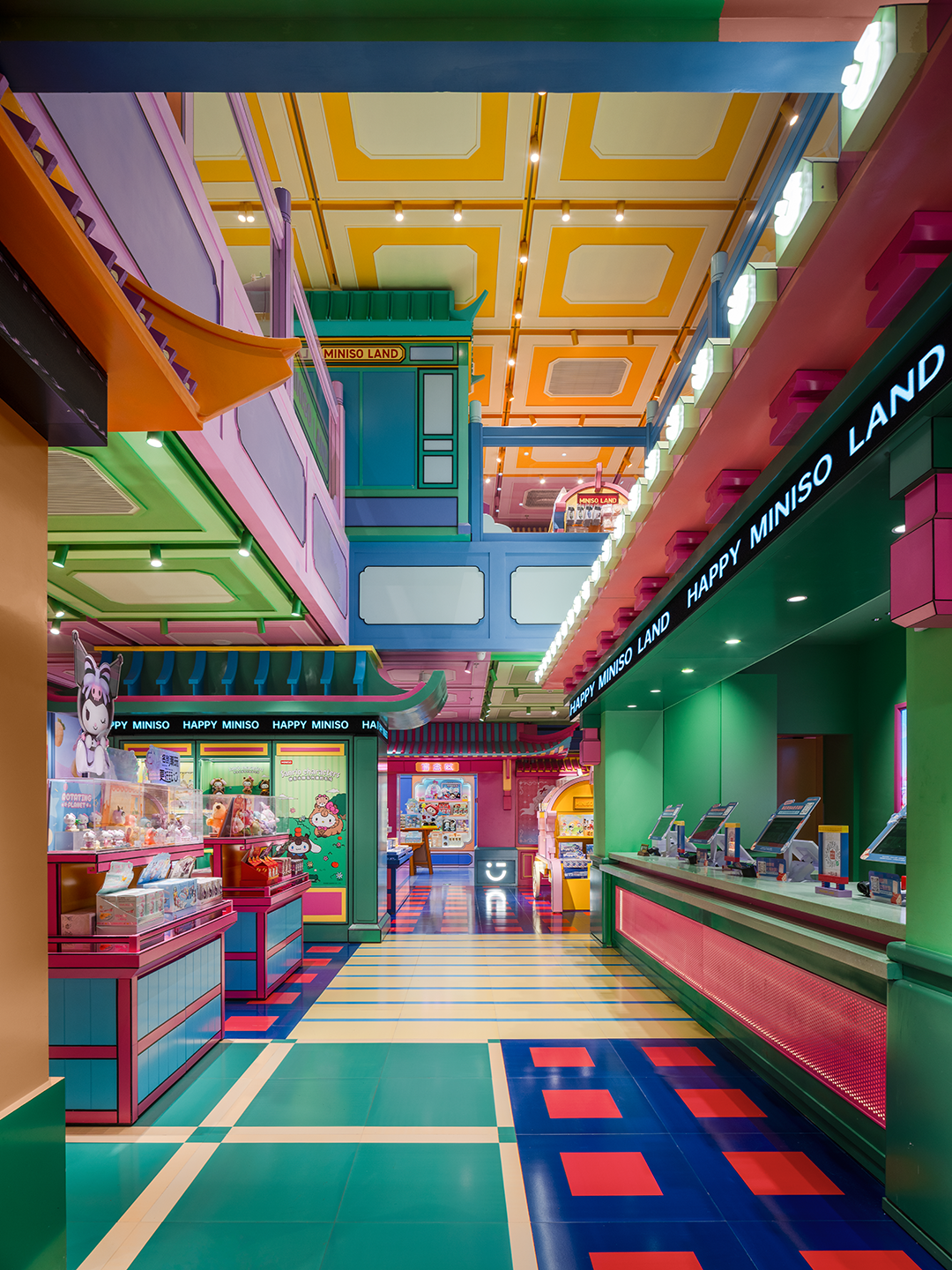
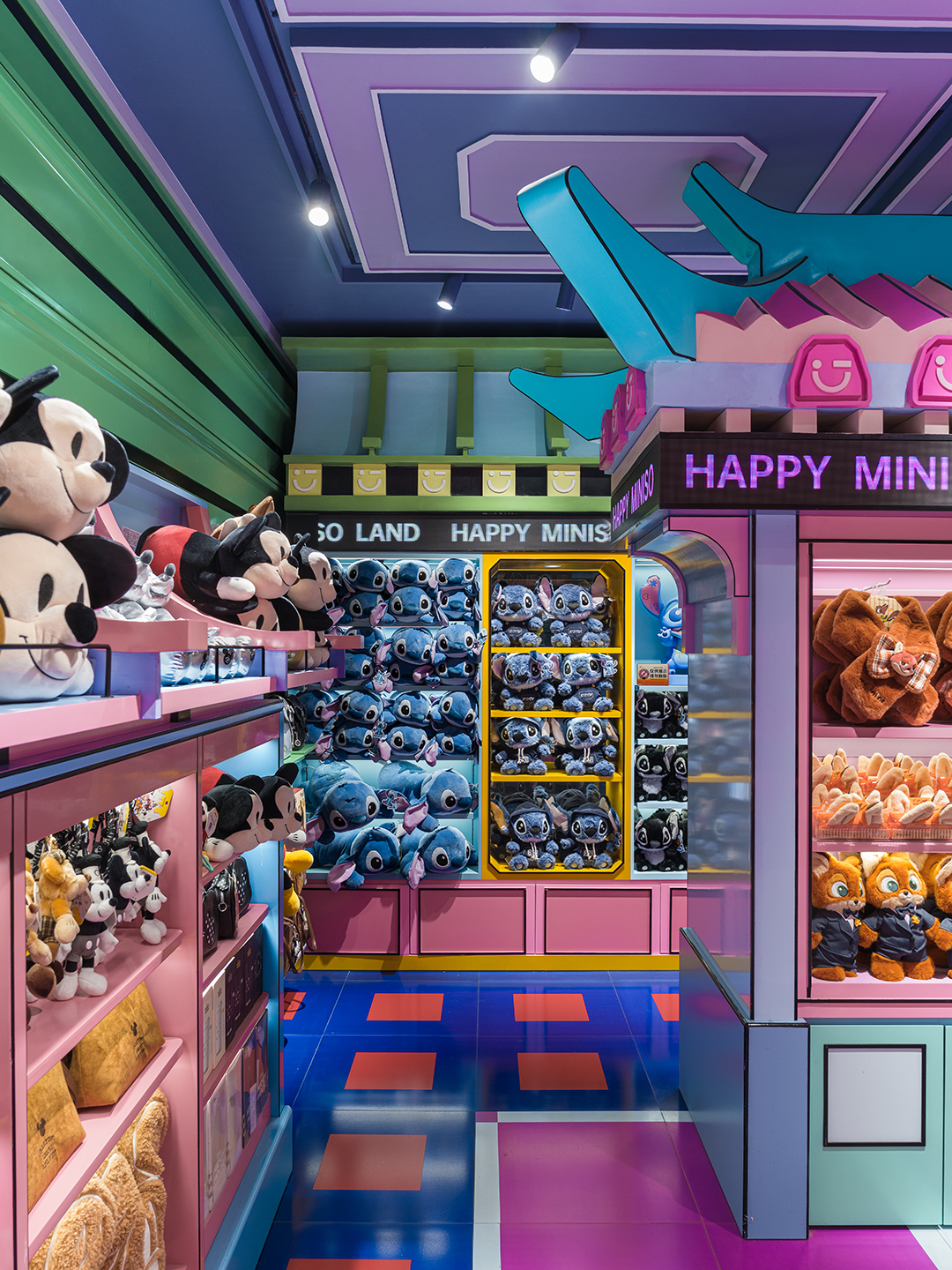
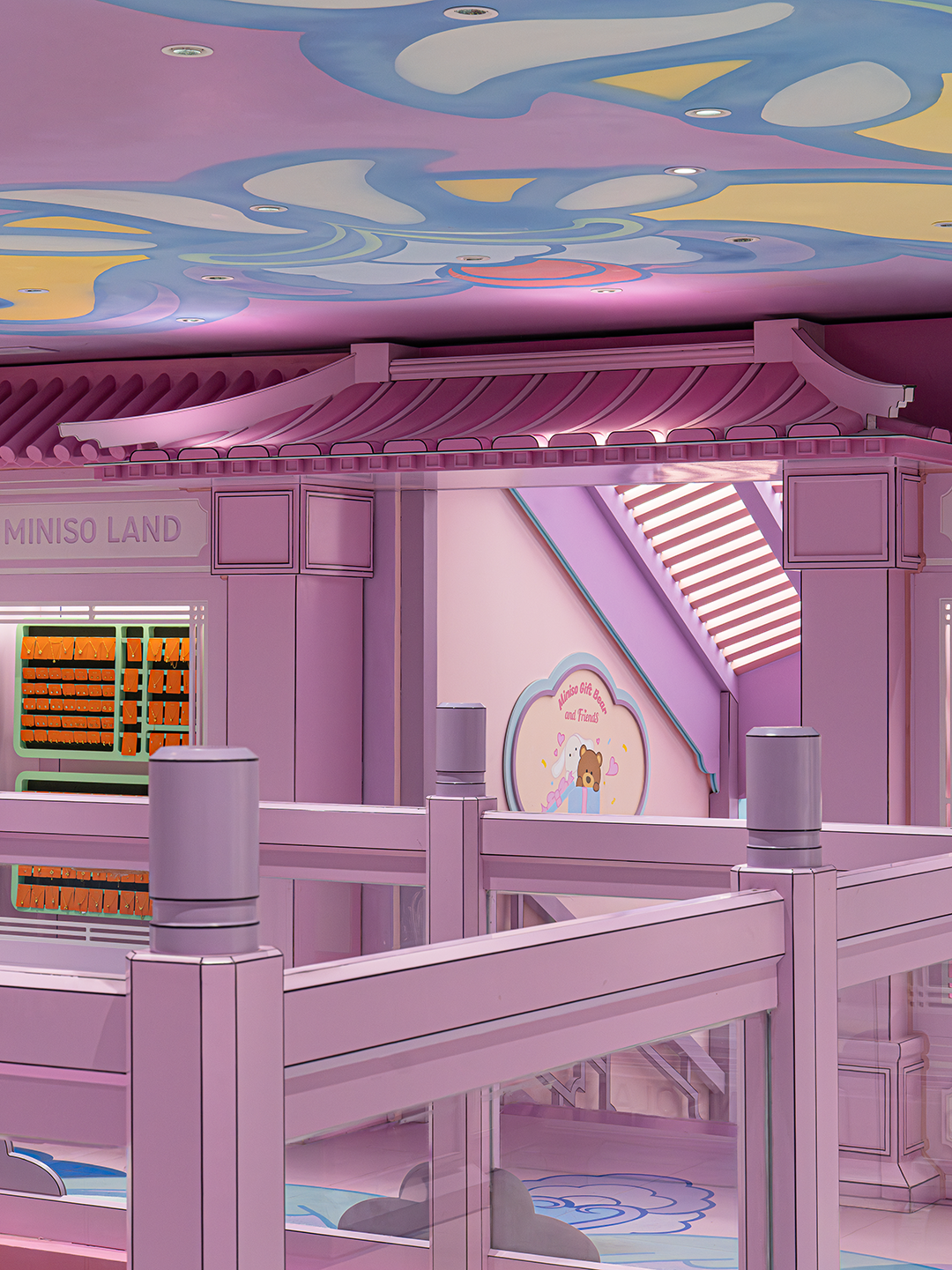
Passing beneath the vermilion beams and red columns of the façade, visitors enter the space as their gaze travels between upturned eaves and flying roof corners. Though indoors, the experience evokes a finely scaled classical architectural ensemble. Undulating rooflines and progressively layered structures carry forward the order, rhythm, and spirit of traditional architecture.
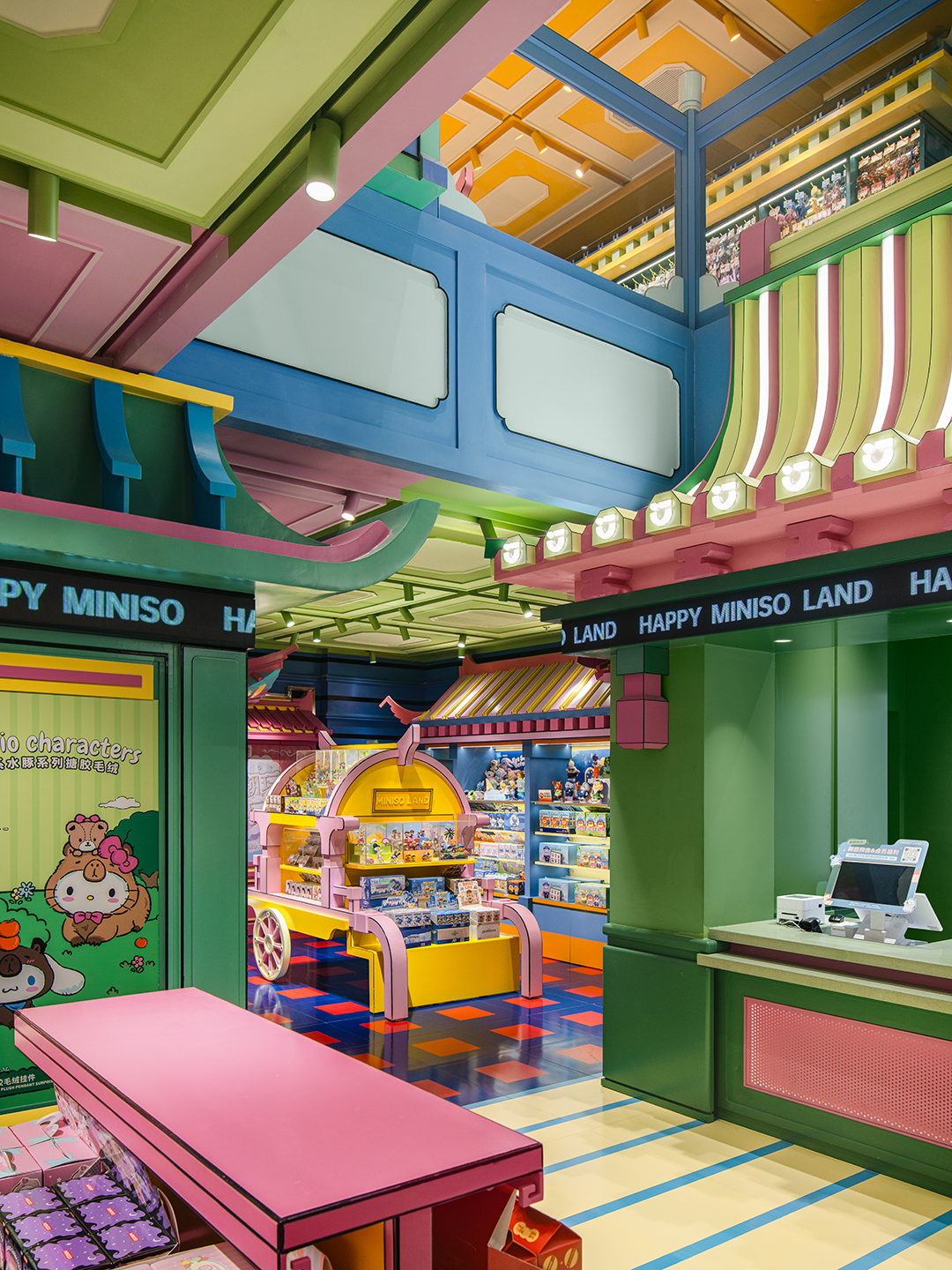
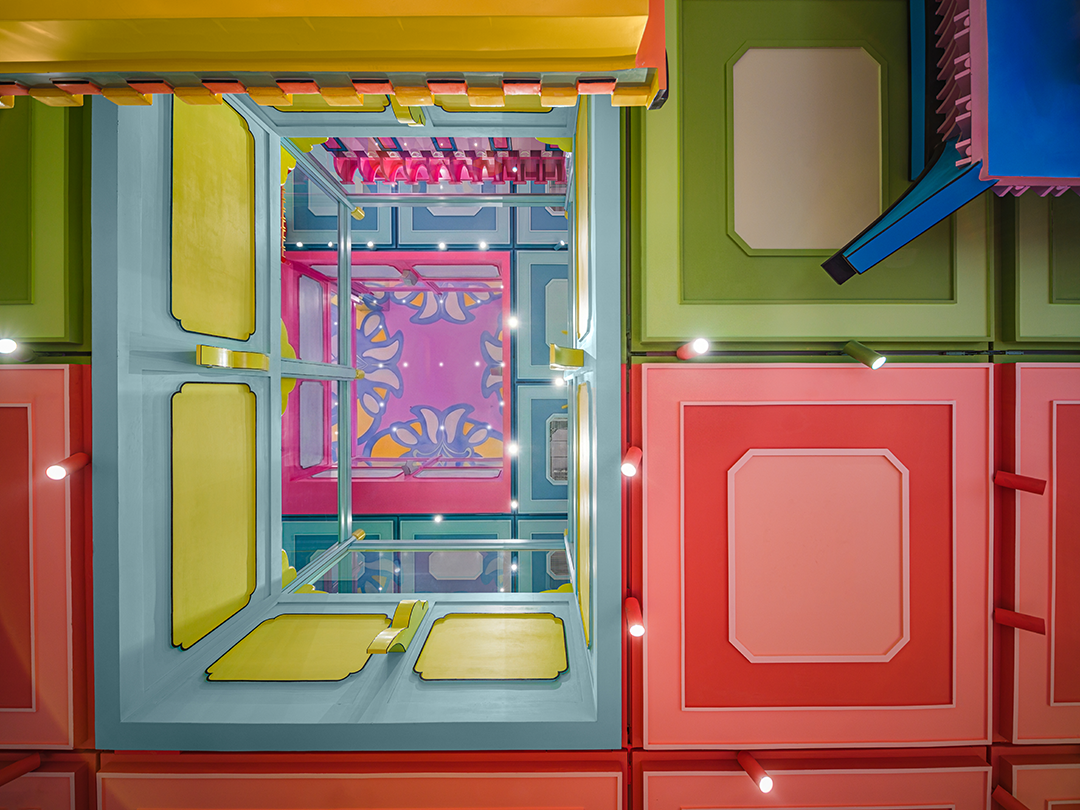
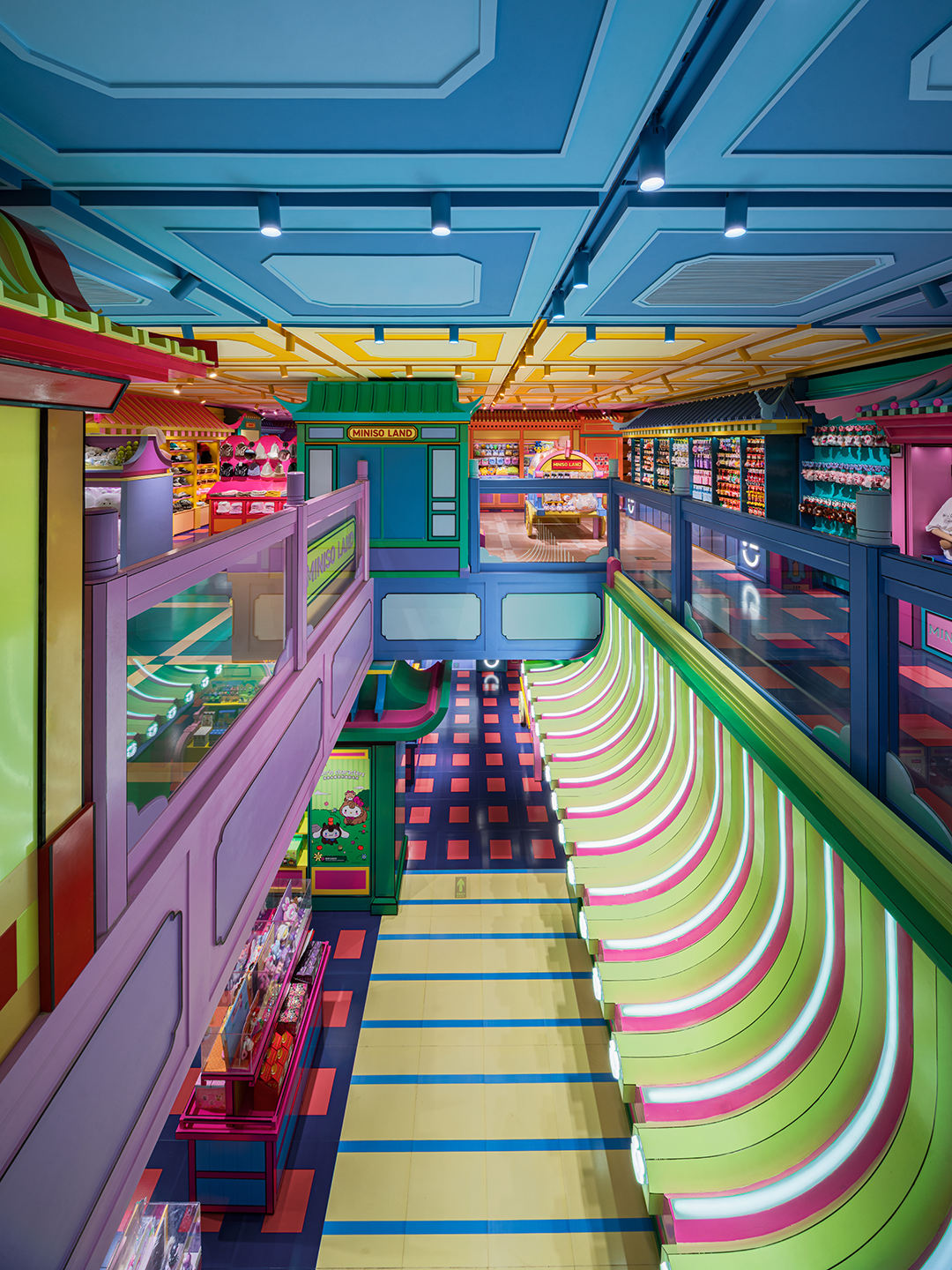
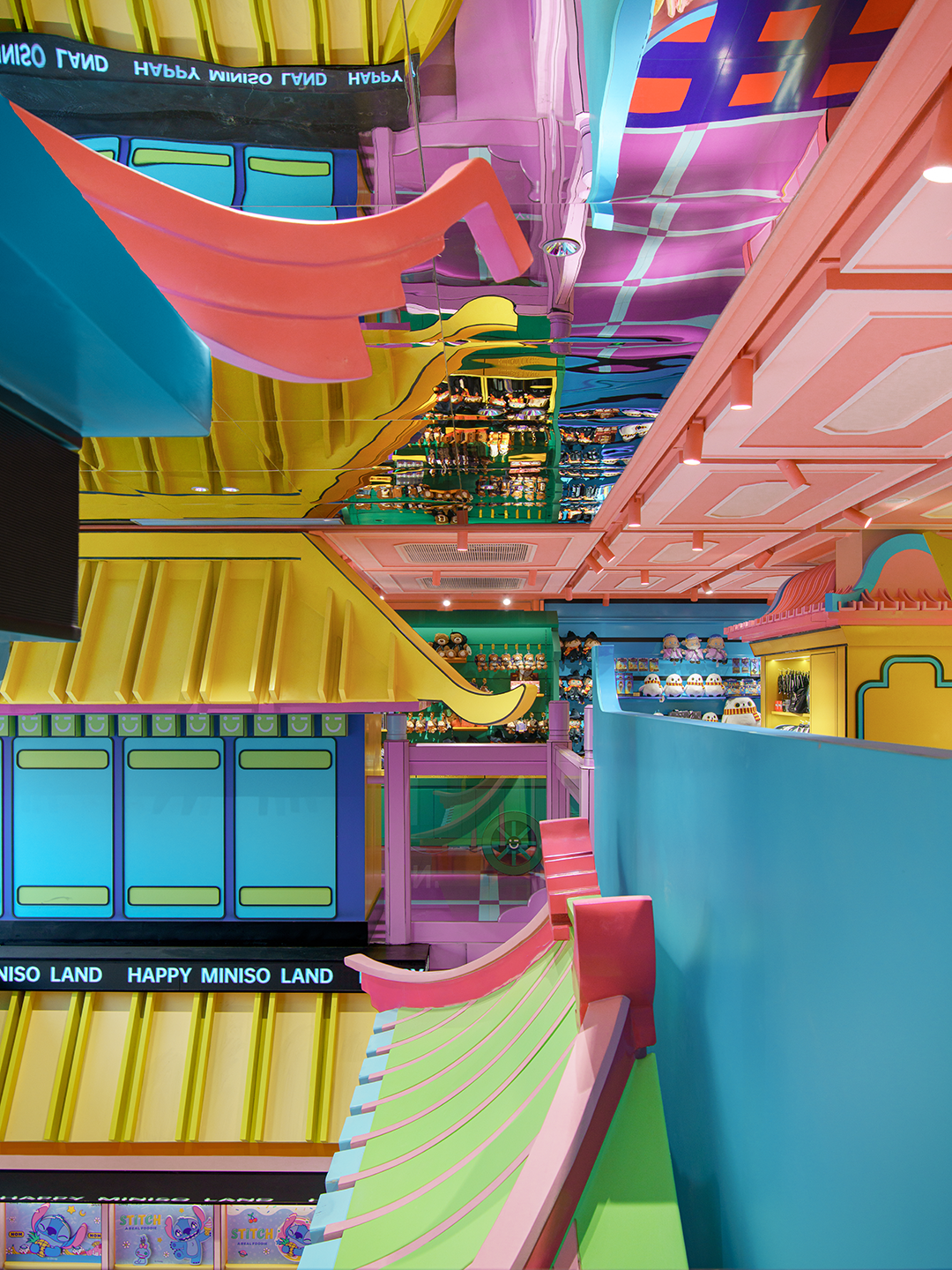
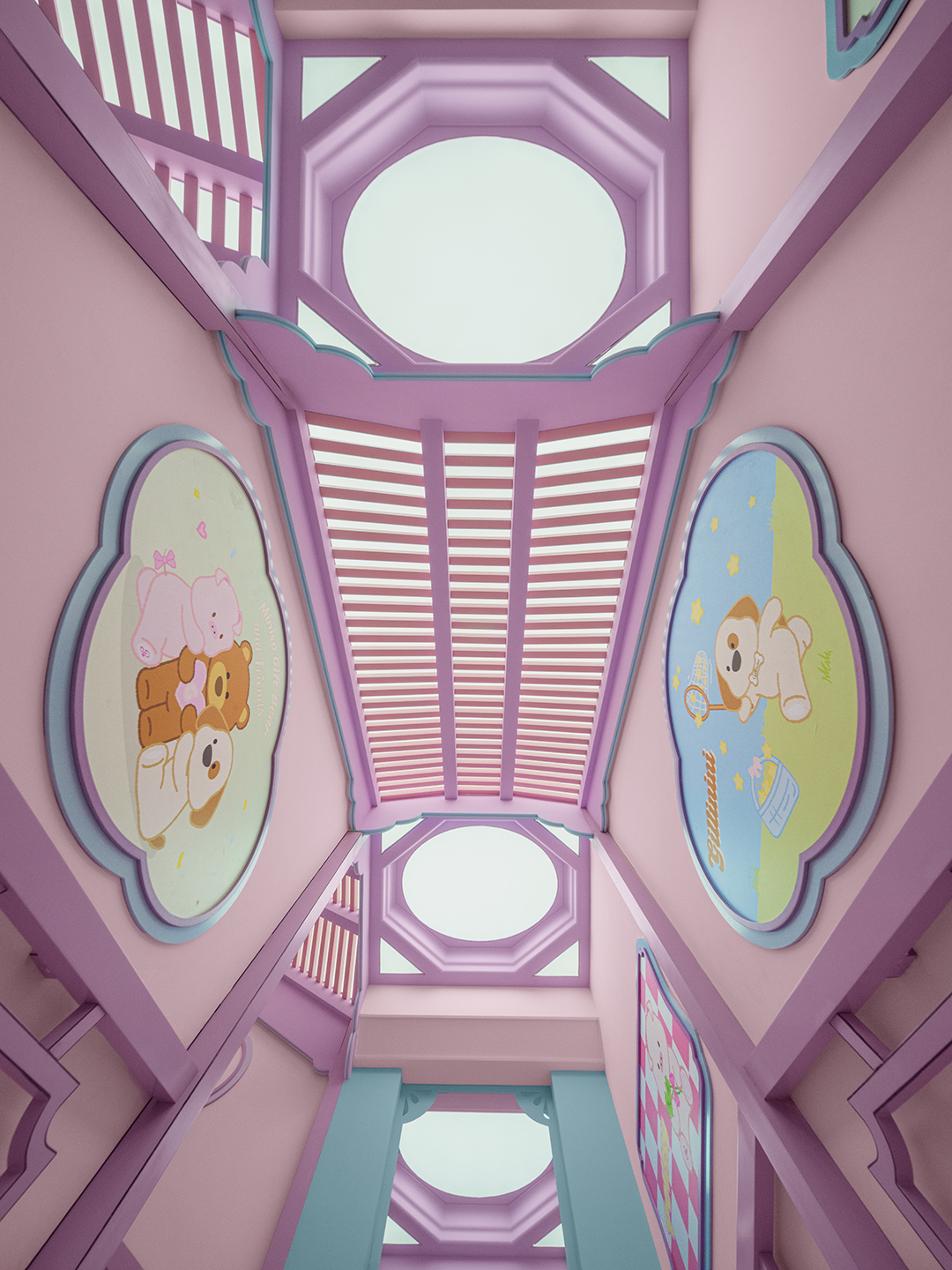
The interior structural system breaks away from the conventional “box-like” retail model. Portions of the original floor slabs were removed to create three small, vertically connected atriums from front to back. Looking upward, one encounters cascading arrays of roof eaves; looking downward, a miniature architectural landscape unfolds in measured layers.
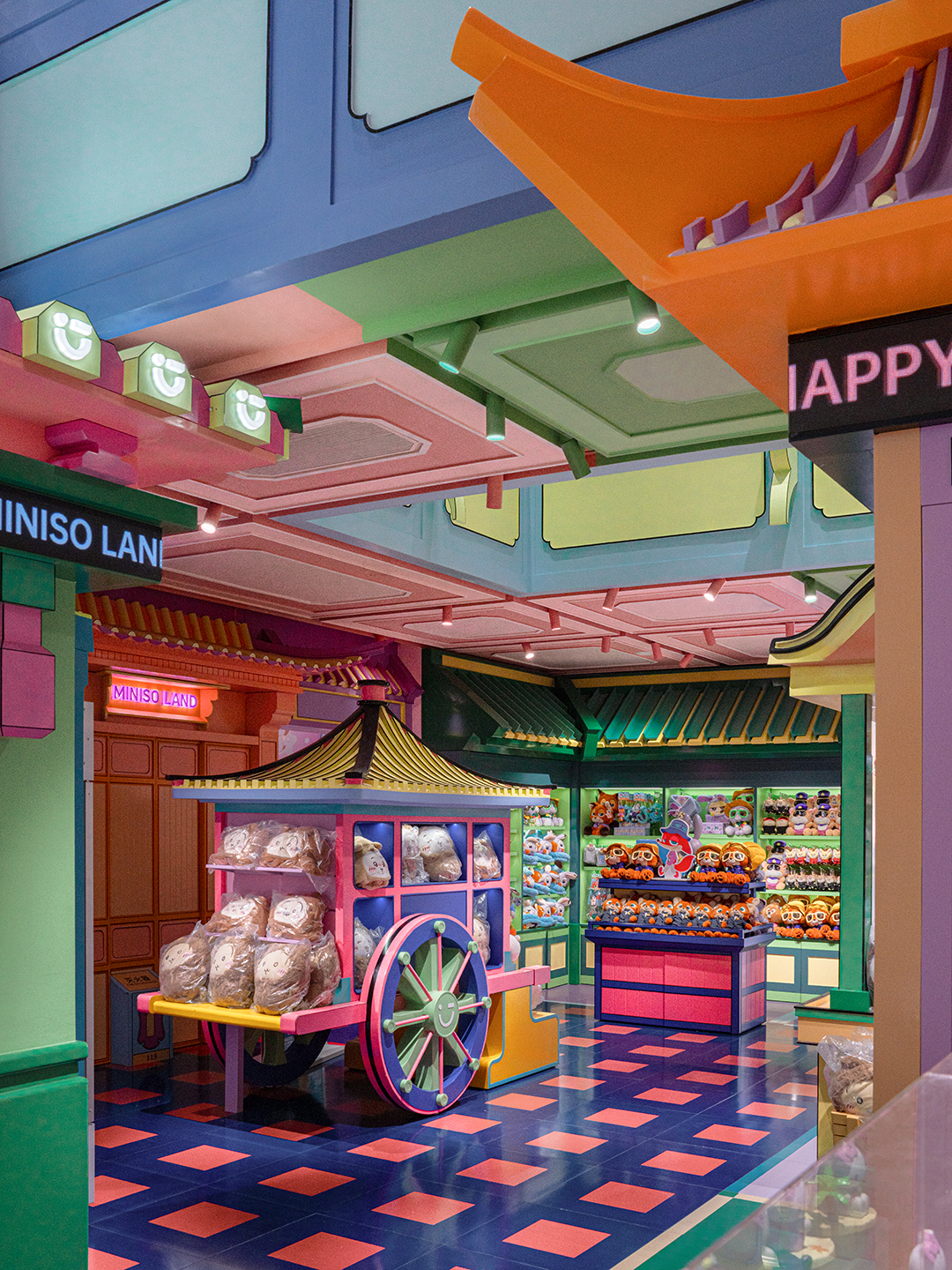
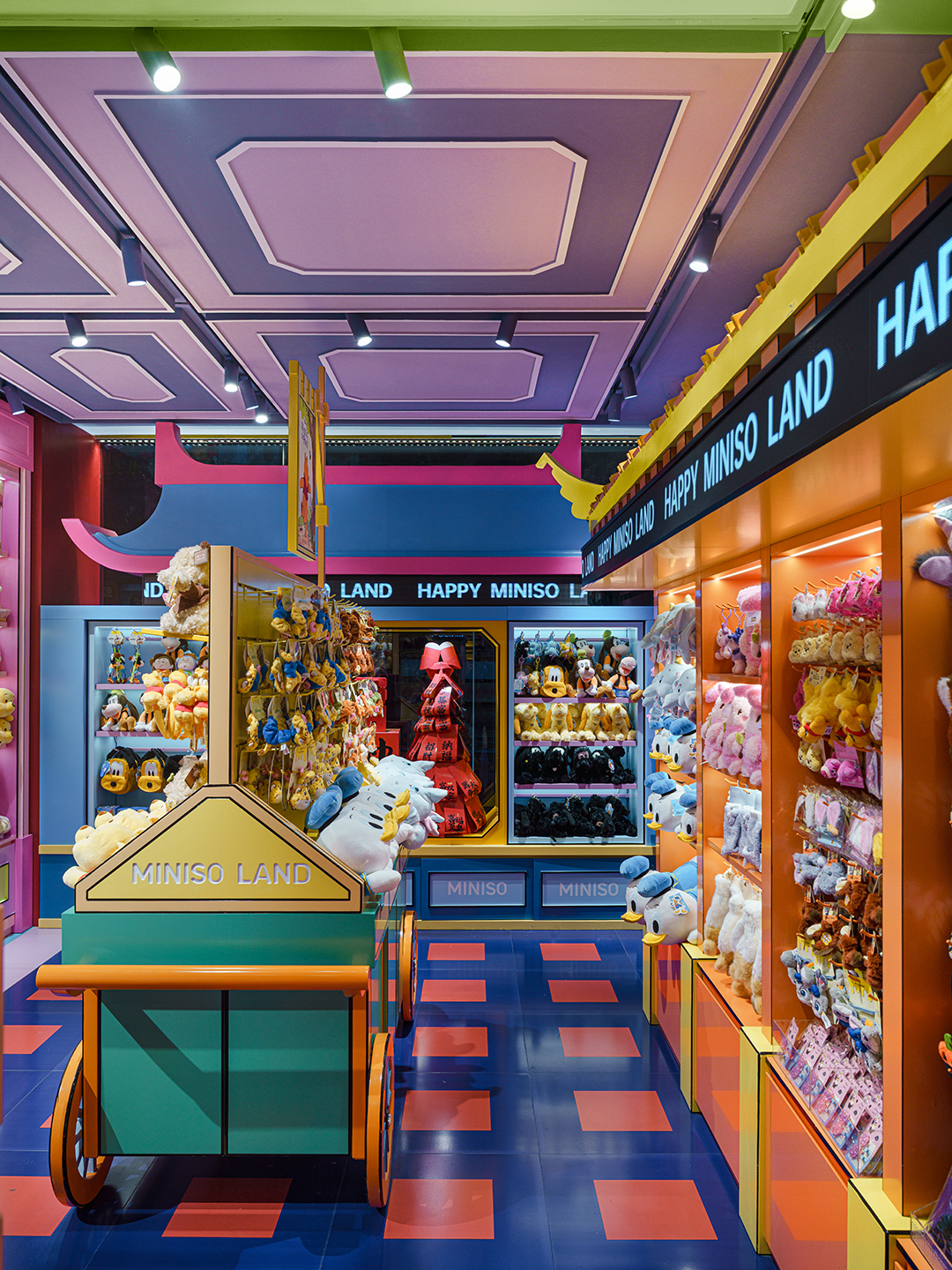
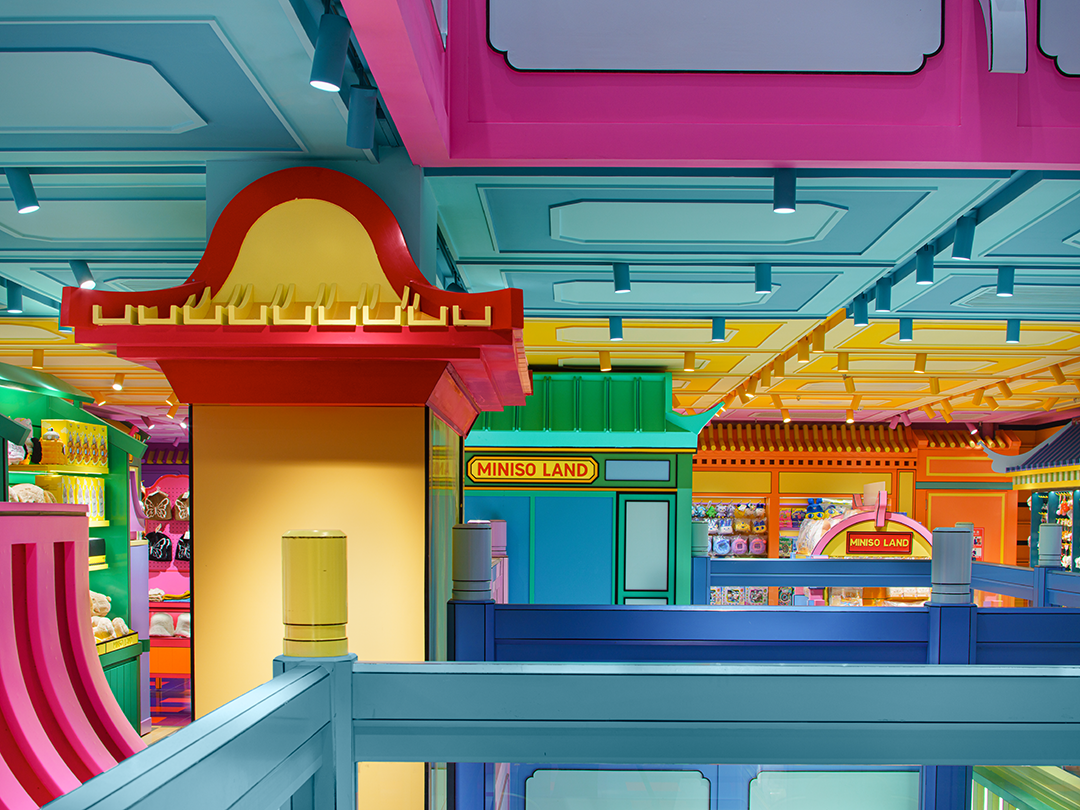
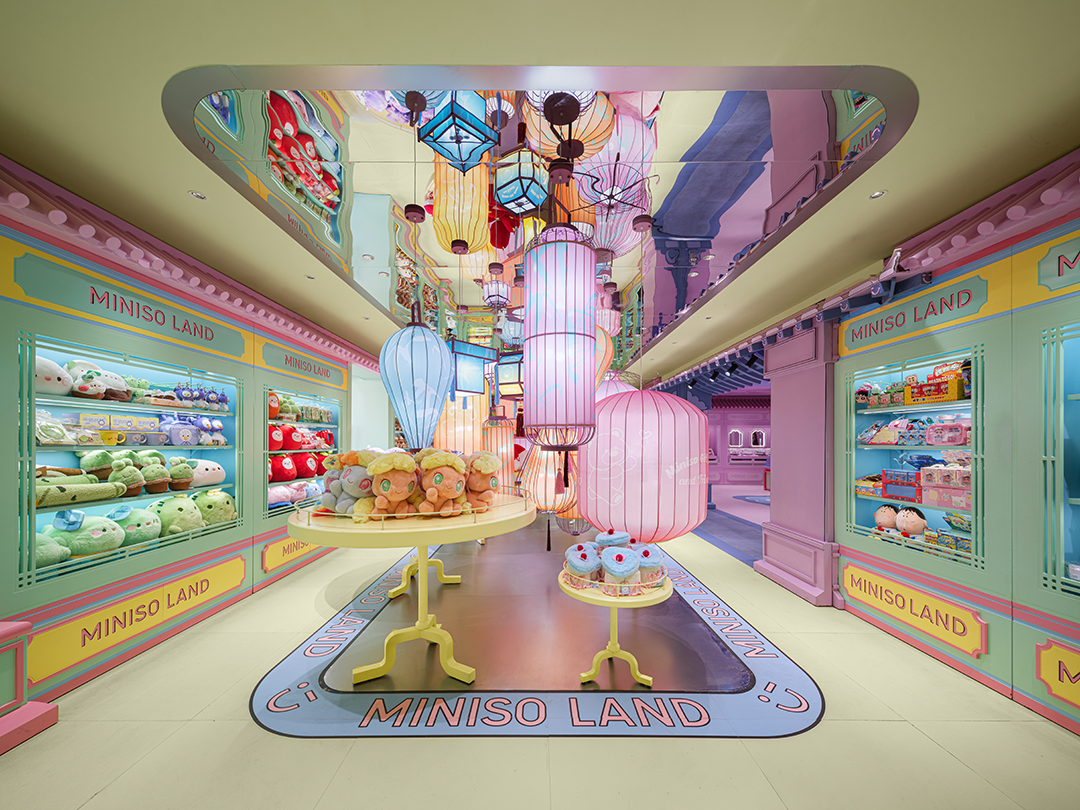
Symbolic, narrative architectural forms replace standard shelving to shape an inner-street spatial framework. Roof ridges incorporate brand identifiers while doubling as display fixtures, and plaque-like elements guide zoning and circulation. Nearby display platforms echo the distant rooflines. As one moves through the space, the scene unfolds like a handscroll, shifting with each step.
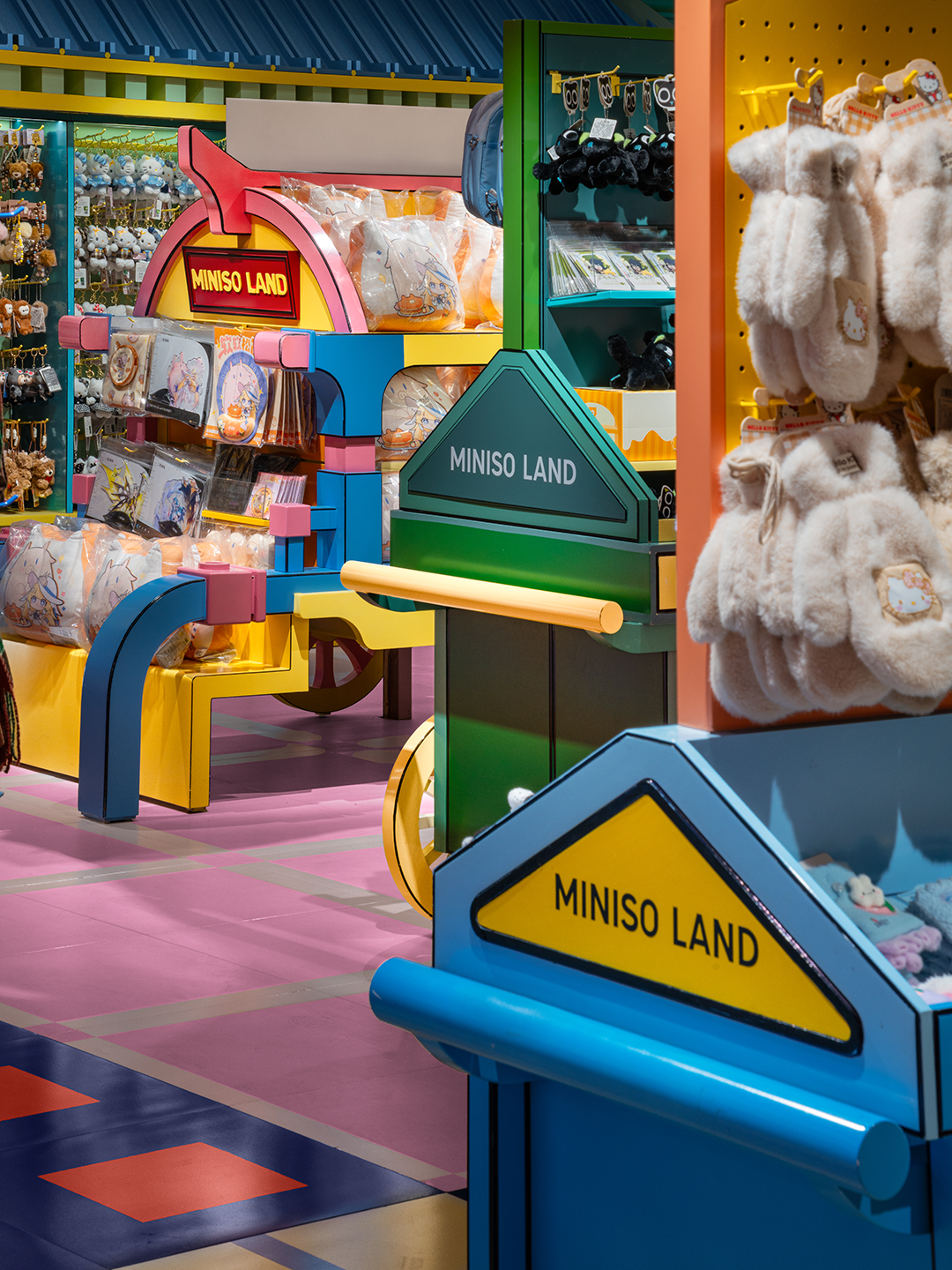
Display units interwoven throughout draw inspiration from An Era in Jinling, an ancient painting depicting the urban life of Nanjing in Song-dynasty. The painting’s vivid depictions of everyday street life, marked by the constant flow of vendors, porters, sedan chairs, and livestock, are abstracted and recomposed into display elements inspired by carts, carrying poles, and cargo boxes.
X+Living developed 55 types of shelving and 21 types of island displays, with conceptual prototypes ranging from traditional architectural forms to carts, cargo chests and so on. Through this customized display system, exhibition functions are embedded within an artistic narrative, creating an immersive, exploratory retail experience.
Wandering Seclusion: Luminous Realms
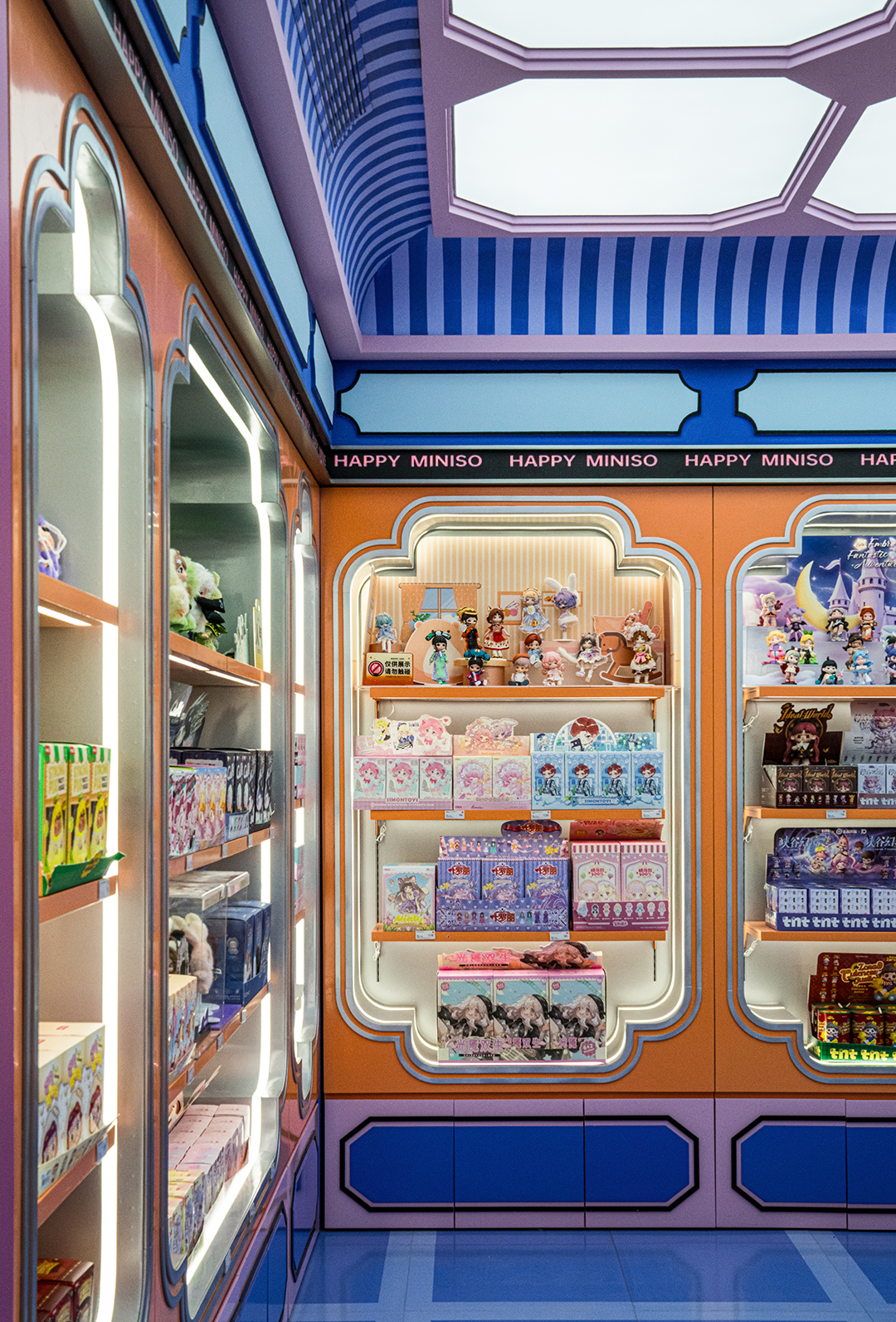
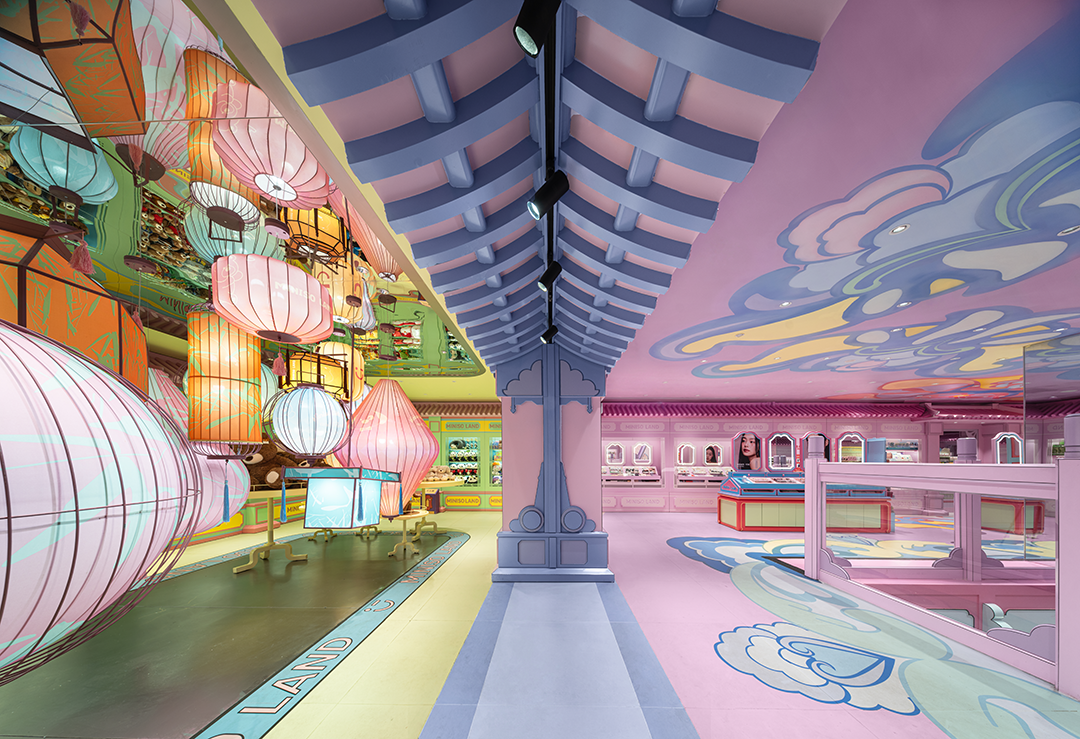
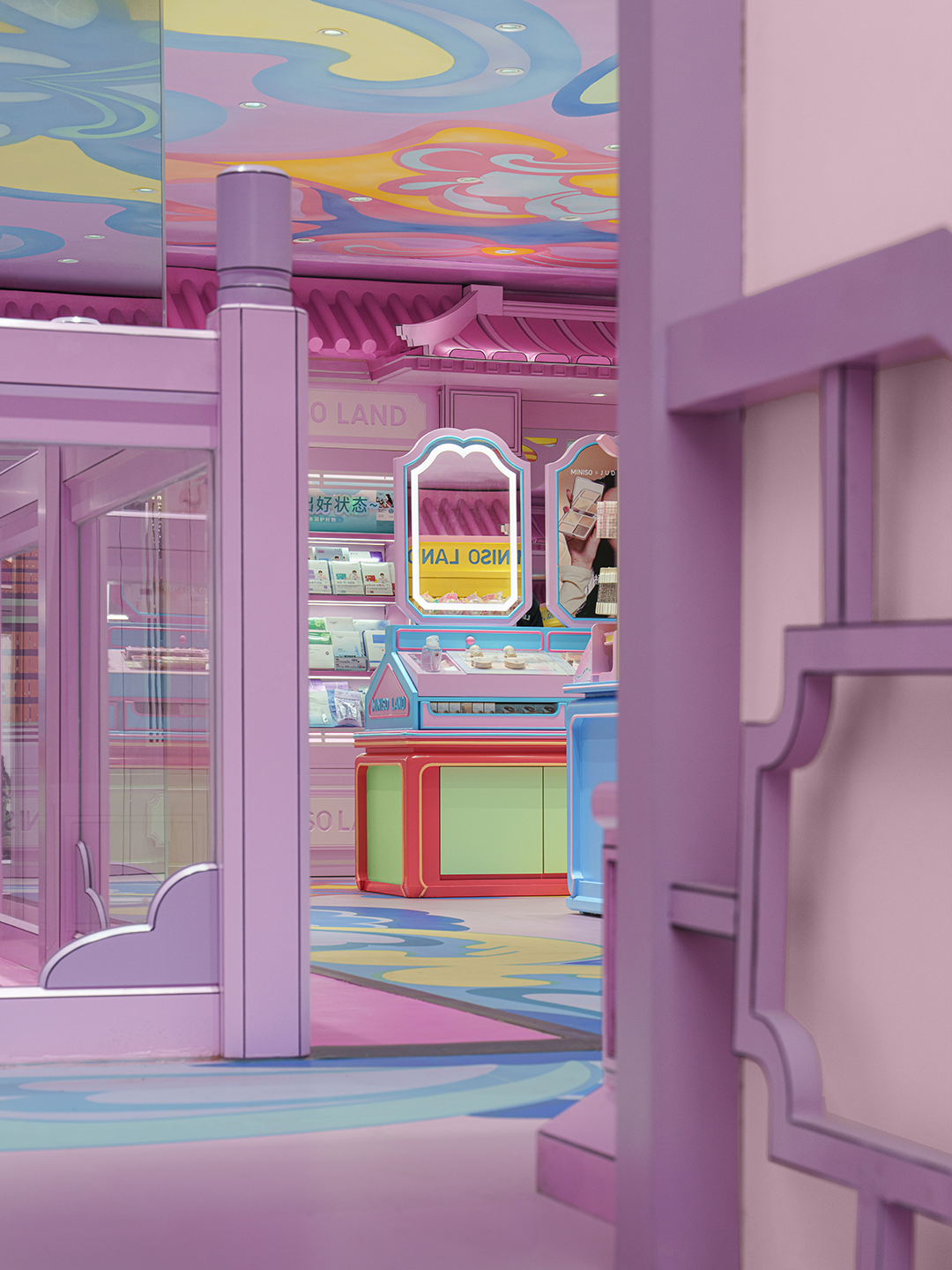
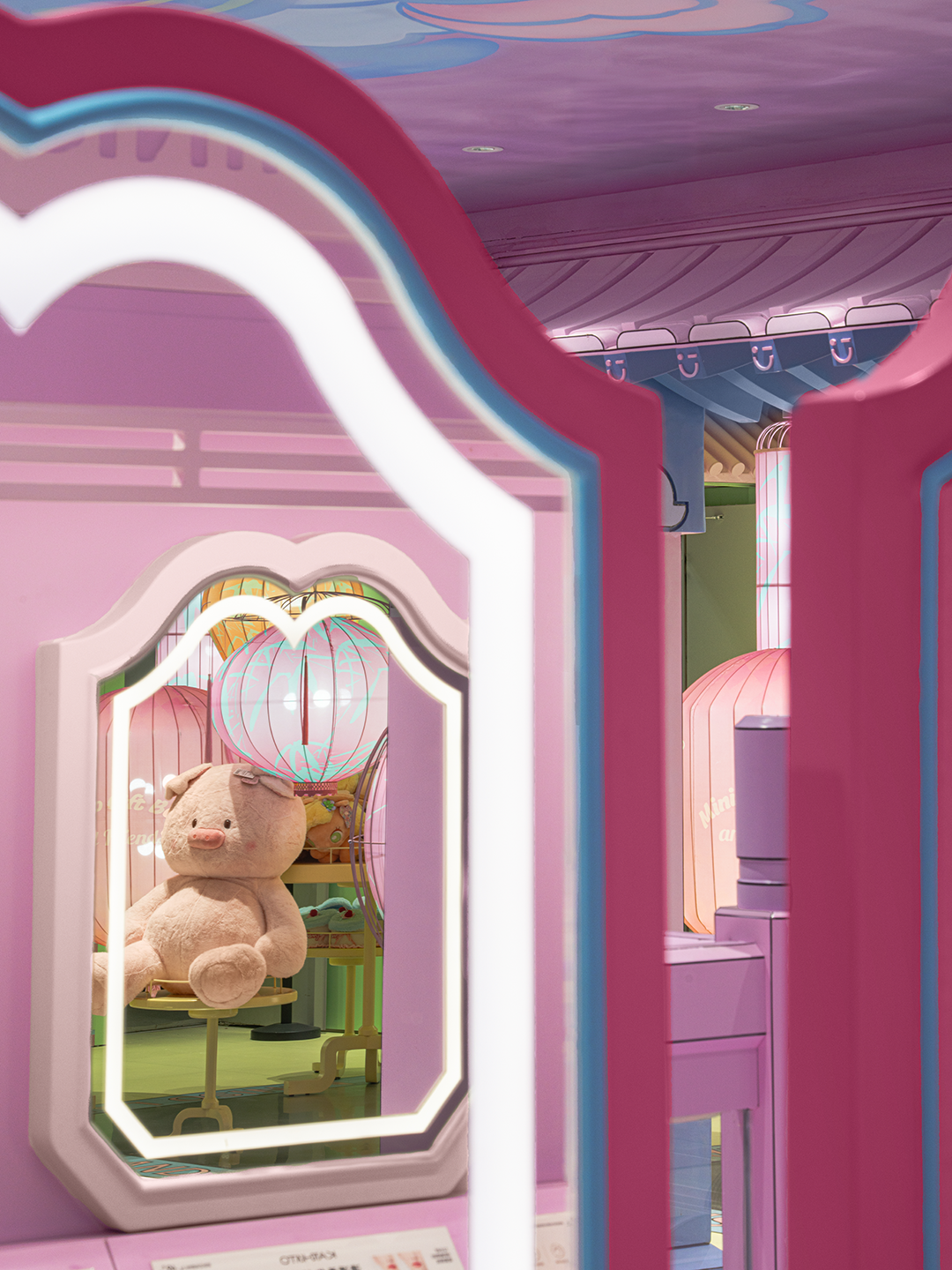
On the third level, the palette shifts toward a softer, more refined tone. Drawing from Nanjing cloud pattern brocade as an aesthetic reference, the designer weaves its patterns into the ceiling and flooring. Imagery from the Qinhuai River lantern festivals is reimagined, where the constant flow of celebratory gatherings finds resonance with the lively commercial setting.
Island displays and shelving evolve from Ming and Qing furniture traditions. The structural logic of classic forms such as mirror cases, treasure boxes, and antique shelves is distilled and reinterpreted for contemporary display, allowing functional objects to become integral to the spatial narrative.
The designer resists reducing historical context to mere commercial ornament, and likewise rejects retail spaces stripped of warmth. Rather than following trends through superficial symbolism, the project adopts a precise yet restrained design language. The textures of architecture and the everyday vitality are carefully translated, enabling them to coexist naturally with trend-driven consumption and retail operations, instead of being forcibly applied. Through the balance of these layered values, the project delivers a considered professional response to the evolution of commercial environments.
Confucius Temple MINISO LAND is not only a city-exclusive store, but also a vivid answer to the question of how future retail can coexist with the city. Its ambition goes beyond visual renewal, focusing instead on a reconfiguration of the logic through which culture empowers commerce.
Here, cultural depth and public spirit redefine the underlying character of retail space. Moving beyond the role of a physical container, the space becomes an active medium that weaves cultural memory and gathers collective emotion. The brand steps outside the constraints of conventional retail, emerging as a connective hub linking cultural tourism, trend consumption, and shared identity, allowing commerce and culture to nourish one another in a continuous, mutually sustaining cycle.
“Standing amid the architectural ensemble of Confucius Temple, modern life and historical accumulation converge, then extend together toward the future. Within this flow of time, the interplay of change and permanence gives rise to a sense of magical realism.
It was precisely this cultural condition, where conflict and fusion coexist, that deeply moved me and became the point of departure for this design: how to respond with sincerity to the site’s singular cultural context and spirit, while remaining sharply attuned to contemporary aesthetics and the brand’s evolving momentum.”
— Chief Designer Li Xiang
Confucius Temple stands as both a spiritual totem of Jiangnan culture and an open, pluralistic window onto the world. The design weaves together the millennia-old cultural lineage of Nanjing with the brand’s youthful, trend-forward, “Life is for Fun” DNA, achieving a dual expression: the regeneration of a historic district’s value and the articulation of confident brand culture.
Nested Spaces: The Framed View
The Confucius Temple complex is grounded in the architectural language of the Ming and Qing dynasties, defined by composed proportions and clear layers, embodying the distinctive rhythm and discipline of traditional Jiangnan architecture.
Building upon this foundation, the designer distilled its essence by incorporating the tou-kung brackets, beam-and-lintel structures, and geometric motifs of Mingyuan Building along the central axis of the Jiangnan Examination Hall into the façade design. Through the interplay of beams and columns, architectural elements are reinterpreted as framing devices that compose spatial vistas.
The cadence of tiered rooflines and the scale of traditional streets and alleys become structural symbols that guide the spatial construction from exterior to interior, while highly saturated colors imbue the ancient architecture with a digital-era playful aesthetic.
Double-height, transparent glass storefront draw the interior’s staggered, progressively layered spatial structure into view, creating a street-level experience where scenes unfold within frames and frames give way to deeper scenes. Commercial display windows thus become moving picture frames along the cultural and tourism route.
Vermilion columns and gray-tiled roofs anchor the space firmly within the historical context of Confucius Temple, while the vibrant chromatic language animating the beams and columns breaks through temporal boundaries. The striking contrast between historic architectural textures and dopamine colors defines a bold aesthetic tension.
The designers have replaced static displays with narrative scene-making, leveraging urban cultural symbols to craft unique, irreplicable settings. Screen-like LED signage at the eaves and digital displays embedded within window openings extend public interaction through digital media. Brand imprints articulated at the eaves, column bases, and lanterns enable a dialogue between past and present, allowing commerce and culture-driven tourism to coexist and intertwine, completing the transformation from a closed retail venue into an open urban landscape embedded within the city’s culture.
Layers Beyond Folding Landscapes
Passing beneath the vermilion beams and red columns of the façade, visitors enter the space as their gaze travels between upturned eaves and flying roof corners. Though indoors, the experience evokes a finely scaled classical architectural ensemble. Undulating rooflines and progressively layered structures carry forward the order, rhythm, and spirit of traditional architecture.
The interior structural system breaks away from the conventional “box-like” retail model. Portions of the original floor slabs were removed to create three small, vertically connected atriums from front to back. Looking upward, one encounters cascading arrays of roof eaves; looking downward, a miniature architectural landscape unfolds in measured layers.
Symbolic, narrative architectural forms replace standard shelving to shape an inner-street spatial framework. Roof ridges incorporate brand identifiers while doubling as display fixtures, and plaque-like elements guide zoning and circulation. Nearby display platforms echo the distant rooflines. As one moves through the space, the scene unfolds like a handscroll, shifting with each step.
Display units interwoven throughout draw inspiration from An Era in Jinling, an ancient painting depicting the urban life of Nanjing in Song-dynasty. The painting’s vivid depictions of everyday street life, marked by the constant flow of vendors, porters, sedan chairs, and livestock, are abstracted and recomposed into display elements inspired by carts, carrying poles, and cargo boxes.
X+Living developed 55 types of shelving and 21 types of island displays, with conceptual prototypes ranging from traditional architectural forms to carts, cargo chests and so on. Through this customized display system, exhibition functions are embedded within an artistic narrative, creating an immersive, exploratory retail experience.
Wandering Seclusion: Luminous Realms
On the third level, the palette shifts toward a softer, more refined tone. Drawing from Nanjing cloud pattern brocade as an aesthetic reference, the designer weaves its patterns into the ceiling and flooring. Imagery from the Qinhuai River lantern festivals is reimagined, where the constant flow of celebratory gatherings finds resonance with the lively commercial setting.
Island displays and shelving evolve from Ming and Qing furniture traditions. The structural logic of classic forms such as mirror cases, treasure boxes, and antique shelves is distilled and reinterpreted for contemporary display, allowing functional objects to become integral to the spatial narrative.
The designer resists reducing historical context to mere commercial ornament, and likewise rejects retail spaces stripped of warmth. Rather than following trends through superficial symbolism, the project adopts a precise yet restrained design language. The textures of architecture and the everyday vitality are carefully translated, enabling them to coexist naturally with trend-driven consumption and retail operations, instead of being forcibly applied. Through the balance of these layered values, the project delivers a considered professional response to the evolution of commercial environments.
Confucius Temple MINISO LAND is not only a city-exclusive store, but also a vivid answer to the question of how future retail can coexist with the city. Its ambition goes beyond visual renewal, focusing instead on a reconfiguration of the logic through which culture empowers commerce.
Here, cultural depth and public spirit redefine the underlying character of retail space. Moving beyond the role of a physical container, the space becomes an active medium that weaves cultural memory and gathers collective emotion. The brand steps outside the constraints of conventional retail, emerging as a connective hub linking cultural tourism, trend consumption, and shared identity, allowing commerce and culture to nourish one another in a continuous, mutually sustaining cycle.